Spiritual Practice of You: Healthy Relationships

I had a long workout planned this morning, 6-8 miles. I did not get it in, I have a lot of excuses as to why. The biggest excuse was that I just enjoyed spending time with my wife a lot more than I would have enjoyed running in the 25-degree, 11 mph wind this morning. We do not get moments like this much anymore. I work 8-10 hours most weekdays and at least 5 hours on the weekends. She works 12 hours a day 3 days a week. And she switches back and forth between night and day shifts. So, these moments are precious and few.  

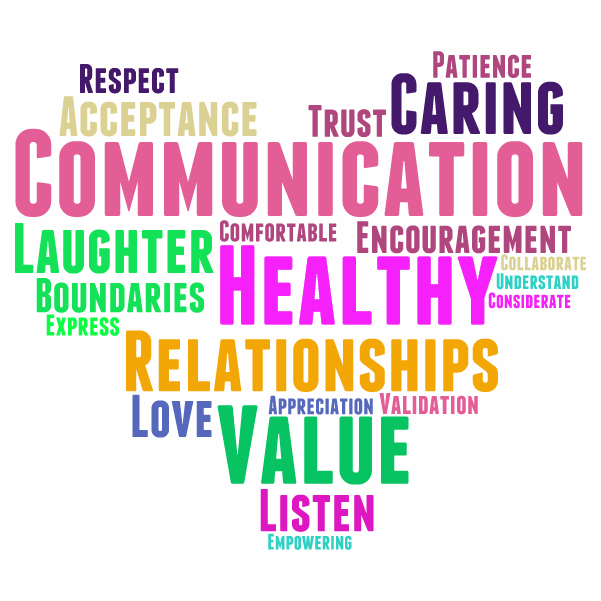
In this post, I want to discuss relationships and how like many of the practices I talk about under this title, maintaining a healthy relationship is a spiritual practice that obviously benefits you, but also widens your influence and broadens and strengthens your social relationships.  

As an Outpatient Mental Health Therapist, some of my work is devoted to helping couples figure out and navigate around the obstacles they are facing in their relationships. I was trained in 2020 in the Gottman Method of couples therapy. Over the pandemic, I as well many in my field observed an increase in a variety of mental health presentations. Couples also began to show up in large numbers in my referral list.  

The Gottman Method Briefly https://www.gottman.com/about/the-gottman-method/ 

Established by John and Julie Gottman over forty years ago, it uses extensive research to provide evidence-based couples therapy to couples whose relationships are in trouble. Their main premise is moving gridlocked issues into dialogue through the identification of markers that demonstrate indicators for maritial demise.  

According to their website, “The Gottman Method aims “to disarm conflicting verbal communication; increase intimacy, respect, and affection; remove barriers that create a feeling of stagnancy and create a heightened sense of empathy and understanding within the context of the relationship.” 

Another hallmark of their work is their notion of the “4 horsmen of the apocalypse”: 

First, couples who stay together experience at least five positive interactions for every negative interaction during conflict. In addition, couples who broke up exhibited a high level of behaviors that Gottman refers to as the “Four Horsemen of the Apocalypse,” which include: 

Criticism 

Defensiveness 

Contempt 

Stonewalling, or withdrawing from interaction 

How a couple does relationship directly impacts the family system they later create. Alcoholism, emotional immaturity, and trauma all impact the relationship and eventually impact how the couple attaches to their children and the type of parenting they display.  

How Attachment Disruption Disrupts Relationships 

There are four types of parenting styles and there are four types of attachment styles. John Bowlby is often credited as being the father of attachment theory, Mary Ainsworth is also noted for her work with attachment. John Bowlby devoted extensive research to attachment, describing it as a “lasting psychological connectedness between human beings.”(Fuertes, et al. 2017).  

 Bowlby shared the psychoanalytic view that early experiences in childhood are important for influencing development and behavior later in life. 

From my side of the chair, the correlations between one’s parenting style and the attatchment style they create in their child is crystal clear. One of the many themes I engage with my clients in is the role shame and guilt have in the development of their children. Say for example, if one engages in the traditional authoritarian parenting style (high demandedness, low emotional connectivity), it is often observed that the results will create more of shame response.  

In child/parent development, shame creates the illusion that there is something wrong with oneself. Bids for repair are often unsuccessful. With a guilty response, guilt simply acknowledges one did something wrong and the bid for repair is created and successful.  

The resultant effect across the lifespan is the creation of anxiety and depression in an individual, poor coping skills, codependency in some cases (other factors are involved here) and significant issues with communication and connectivity in future relationships.  

Parenting and Attachment Styles:  


Parenting styles: 

Authoritative 

Authoritarian 

Neglectful 

Permissive 

Attachment styles 

Secure 

Ambivalent 

Avoidant  

Disorganized 


Cultivating a Healthy Relationship 

Cultivating a healthy relationship starts with you. Maslow’s hierarchy of needs suggests that one needs to have a sense of safety in order to cultivate higher levels of need such as relationships, self-esteem and self-actualization. There are two relationships that I observe from my side of the chair that are problematic these days. Interpersonal relationships and one’s relationship with their religious system, in particular, Christian ideals around what a relationship should be. Both can be incredibly toxic.  

Cultivating a healthy relationship starts with you. Addressing any past big T and little t traumas, assessing, and stabilizing your mental health, which includes sometimes taking medicine and always talking to someone and then engaging in healthy lifestyle choices such as eating better and exercising regularly.  

Reference: 

Cherry, K. (2023, December 14). 4 Types of Attachment Styles. Verwellmind. Retrieved February 17, 2024, from https://www.verywellmind.com/attachment-styles-2795344 

Fuertes J N, R. Grindell S, Kestenbaum M, Gorman B. Sex, Parent Attachment, Emotional Adjustment, and Risk-Taking Behaviors, Int J High Risk Behav Addict. 2017; 6(2):e36301. doi: 10.5812/ijhrba.36301. 



Clanging Cymbals and Thrashing Gongs: 

Thoughts on Love 


There are nine types of love according to the Greeks: Philia, Pragma, Storge, Eros, Ludus, Mania, Philautia, Agape and Meraki. If we have taken any traditional Sunday school class or marriage encounger class, we have seen at least three of these, eros, philia and agape. This week, as we celebrate Valentines Day, I want to write two posts looking at love, one from a broader, contemplative perspective and one from a personal growth perspective.  

What does it mean to love well? 

Love is one of the most if not the most important human emotions. Everyone loves, that is, everyone experiences the emotion of love. A distinction should be made though, that not everyone feels or expresses this emotion. There are many reasons for this, mostly having to do with how one develops and what life circumstances teach a person.  

Patience. My wife and I have been together for twenty-seven years. We have put up with a lot from each other. Both of us are first borns and can be as stubborn as a mule. In my ealier days, when my Attention Deficit and Hyperactivity Disorder was at its worse, I was a pain in the ass. I still am, I like to believe less so. My wife could be a saint. The point is love is patient.  

In my next post, I will talk about this more, but in relationships, there must be a mutual back and forth. This is true for romantic and platonic relationships. To love well seeks one’s ability to lean into the other person, to understand their viewpoint.  

To love well is to understand that we all make mistakes while doing what we perceive to be the right action. Culture, religion, and society all shape us away from our original goodness and we strive to be “good.” To love well is to tune in to our true selves, see ourselves as lovable and loving and then see others the same.  

God is love 

There is a lot written about the essence of what and who God is. For the sake of this post, I simply want to stick with the notion that God is love, I feel that it is just this simple. A few years ago, I was able to contribute to an anthology of essays about God’s love for the theologian Thomas J Ord. He recently coined the word, amnipotence as a way to take a fresh approach to how we see God in his book, The Death of Omnipotence… and Birth of Amipotence.  

Ord feels this new theological concept stresses the importance of love over power when we talk about God.   

If we do not have love 

Something I came across recently in my studies was this notion that the Bible was not written with us in mind. I think this is a deeply important idea considering how we as modern people interpret the Bible. Love is an example of one of these concepts. As previously mentioned, there are several words attributed to love in the Greek. In our modern parlance, we have one word, love, which is seen as an emotional state. The expressions of love, the other words in Greek then in English are more expressions or feelings of love or the subjective state of love. If we do not have love for ourselves, we cannot have love for others. If we consider the words from 1 Corinthians 13, love is patient, kind, is not proud or boastful and does not envy, we get a blueprint on how to love.  

Surprise, I am going to look at this like a behaviorist. If one is loving in a way that is boastful or proud, is this really love for the other, or is this one loving the concept of one loving the other? Meaning are you in love with the idea of you loving someone else or even doing ministry for another person? I feel too often our churches these days do the latter. They love the other because they love the idea of their mission work “saving souls for Jesus.” But is this really love?  

Too often in my office, I work with low self-esteem and self-worth. Inevitably, one who exhibits these traits suffers in their relationships with others. Again, to reiterate, to love others, first you must love yourself.  

Love for a troubled world.  

I come back to lovingkindness: 

May you be safe 

May you be happy 

May you be at ease 

If you do not have love, you are simply a clanging gong or thrashing cymbal. God loves unconditionally. God gets us not because God recognizes our plights, our differences, or our struggles. God Gets us because we were wonderfully made, in love and with compassion. Each hair, each wrinkle, each dimple, each freckle. All were thoughtfully considered by God. Certainly, we can explain this away as genetics, but God gave us this gift to even understand the notion of genetics.  

God loved first.  

Blessed are the Peacemakers- 

a Meditation on Non-Violence 


We are hearing a lot about violence these days. Has it ever gone away? Will we ever find peace? 

As we celebrate Black History Month, I want to briefly highlight the nonviolent thinkers and doers of the Civil Rights movement, I then want to narrow my focus to how we can cultivate nonviolence in ourselves.  

Blessed are the Peace Makers 

Jesus was a nonviolent prophet. He used power carefully. But what is nonviolence? In digging around for something I have not talked about. I want to reiterate my earlier point; Jesus was a nonviolent prophet. Again, researching this notion, I came across several blogs that suggest this is a myth. From reading the comments and the blogs, it was apparent that the authors of these blogs did not have clear idea of what Jesus’s Judaism or even Judaism today is all about. See this article by Simon Joseph of the California Lutheran University: https://bibleinterp.arizona.edu/articles/2014/11/jos388005 

Judaism and non-violence 

In Judaism, the Hebrew word for peace is shalom. It suggests a sense of completeness or wellbeing. In Judaism, peace is the ideal state of affairs. It is the ideal state of affairs with others, your community, your world. This is heart of what Jesus is saying when he blesses those who are peacemakers.  

Judaism’s religious texts endorse compassion and peace, and the Hebrew Bible contains the well-known commandment to “love thy neighbor as thyself”. Nonviolent philosophy has roots in Judaism going back to the Jerusalem Talmud of the third century. In Judaism, there is strong language that restricts the use of violence. In Judaism, a life of truth, justice and peace are the three tools one uses for the preservation of the world.  

Against this backdrop, Jesus taught and took a stand. Following in his shadow, Martin Luther King and others took up these three tools to better the communities of their black brothers and sisters.  

King’s Nonviolence 

According to the King Center (https://thekingcenter.org/about-tkc/the-king-philosophy/), their definition of nonviolence reads, “Nonviolence is a love-centered way of thinking, speaking, acting, and engaging that leads to personal, cultural and societal transformation.” 

King was inspired by Jesus but took his formation into a nonviolent activist from the works of Ghandi, who engaged in nonviolent activism to help the Indian people free themselves from British rule.  

King worked with six principles for his approach to nonviolent protest (https://www.unodc.org/documents/e4j/Secondary/Terrorism_Violent_Extremism_Six_Principles_of_Non-Violence.pdf ): 

Principle one: Nonviolence is a way of life for courageous people. It is active nonviolent resistance to evil. It is aggressive spiritually, mentally, and emotionally.  

Principle two: Nonviolence seeks to win friendship and understanding. The result of nonviolence is redemption and reconciliation. The purpose of nonviolence is the creation of the Beloved Community.  

Principle three: Nonviolence seeks to defeat injustice, not people. Nonviolence recognises that evildoers are also victims and are not evil people. The nonviolent resister seeks to defeat evil, not people.  

Principle four: Nonviolence holds that suffering can educate and transform. Nonviolence accepts suffering without retaliation. Unearned suffering is redemptive and has tremendous educational and transforming possibilities.  

Principle five: Nonviolence chooses love instead of hate. Nonviolence resists violence of the spirit as well as the body. Nonviolent love is spontaneous, unmotivated, unselfish and creative.  

Principle six: Nonviolence believes that the universe is on the side of justice. The nonviolent resister has deep faith that justice will eventually win. Nonviolence believes that God is a God of justice. 

King’s nonviolence was not just not hitting back, it was more about putting oneself in the path of violence and responding with love. It was in another way, seeing all people as potential seats of Christ.  

We are all Potential Seats of Christ 

You are God’s beloved. The King Center’s first principle is respect everyone – including yourself. In reading and contemplating this section of my reflection over the last few days, my mind is continually drawn to cultivating a robust Metta awareness and daily practice of metta.  

Simply in this meditation, we consider this: May you be happy, safe, at ease. From here, we contemplate offering this to others, first with someone we love then maybe somebody we are slightly cross with and then, with practice, our enemies.  

Cultivation of nonviolence starts with us. We must recognize the hate within ourselves to see the hate we have for others. Until we can see our own suffering, we will not be able to see it in others. Our seeing will be disingenuous.  


Reference: 

(n.d.). Martin Luther King, Jr.’s Six Principles of Nonviolence handout. United Nations. Retrieved February 10, 2024, from https://www.unodc.org/documents/e4j/Secondary/Terrorism_Violent_Extremism_Six_Principles_of_Non-Violence.pdf 

Spiritual Practice of You: 

Renewing 2024’s Goals 


Alright! We have made it through January. How is everybody doing with their goals? If you have fallen behind on your goals, remember this, every day is a practice of restarting. Today is a great day to renew those goals.  

Dry January 

I am taking on a big challenge this year. I have not run a 50k since the 2020 running season. When COVID hit, I like a lot of people got the shots. Something about the second shot changed the way I recovered from heavier workloads. After I had COVID in September 2021, I had increased fatigue and recovery was a huge problem. In the racing year, 2022, I did not complete a single race due to several factors.  

As the wave of trail running and eventually gravel cycling washed over the endurance community, we were all introduced to the refreshing taste of a local craft IPA after an event. I was caught up in this wave and enjoyed a craft brew or even a whiskey on the rocks after an event. But what if this along with long COVID was holding me back? After working with a coach in 2022, I drastically changed my diet from a Paleo/Keto to one richer in complex carbs. I also started making a huge reduction in the amount of alcohol I was drinking, going from several beers and glasses of wine a week to just drinking on the weekends.  

I have heard about dry January for some time now but never attempted it. As part of my goal this year, I set out to have a dry January to see if it would impact my recovery. The anecdotal answer is not really, I am still tired all the time. I still enjoy an occasional whiskey on the rocks and a nice IPA after a long trail run.  

What happens when one stops drinking alcohol for a time?  

All is not lost, there is a wealth of research that points to the benefits of giving up alcohol. Dr. Andrew Huberman in 2022 put out a podcast that was the number one downloaded podcast around the idea of giving up alcohol. You can check it out here: https://www.hubermanlab.com/episode/what-alcohol-does-to-your-body-brain-health 

According to Huberman, one can see significant improvements in markers of health in the first 2-6 months of ceasing to use alcohol. In an article by BBC Science focus (https://www.sciencefocus.com/the-human-body/stoptober-what-happens-stop-drinking), Dr. Nish Manek points out that within the first few days of stopping alcohol consumption, one’s liver starts repairing itself. Within a week, immune function improves, and cognitive clarity begins to improve as well. Within a few months, liver enzymes improve, mood can improve and weight loss which may have been hard to achieve prior to sobriety may be more achievable.  

I can say after a month of no alcohol, while I am still tired all the time, I do feel more mentally clear, and my sleep anecdotally is better according to my Garmin (I also started supplementing with Melatonin).  

Why Resolutions Fail 

Behavioral change is hard. It takes a good three months just to assimilate to the idea that you are making a change, another 6-9 months to implement the change consistently for it to become a pattern and if you can pull this off for a year to eighteen months, then and only then do you have a change in behavior. In my practice as a therapist, I use the transtheoretical model of change which suggests one must go through five stages in order to make a successful behavioral change: 

  1. Precontemplation: You deny having a problem, but other people may be concerned. 
  1. Contemplation: You think about the pros and cons of change. 
  1. Preparation: You take steps to get ready to make a change. 
  1. Action: You change your behavior. 
  1. Maintenance: You figure out how to stick to your change over the long-term. 

With behavioral change, one must expect setbacks and be prepared to start over again. Every starting over is fine, sometimes it is as easy as picking up the pieces and figuring out what went wrong. If say for example, you broke your diet by bingeing on junk food, evaluate what was in your diet nutritionally? Did you get enough fluid, were you dehydrated? Were you getting enough protein? Did you cut out too many calories too soon and your body’s natural equilibrium for the body weight you are at counteract your desire to eat less calories? It is all a balancing act.  

Being Statements 

I have three sheets of paper taped to my wall in front of my desk. One is entitled 2024 Endurance/ Fun Times and includes all the endurance events I have planned for 2024. This is something I have done to keep me focused since DNF’ing(did not finish) my 100k in 2011. I took that racing bib and taped it above my coffee maker and looked at it every for a year until I ran that 100k in 2012.  

The other piece of paper is also taped behind my coffee maker at my house and in my fax cage in my office. It reads: 

Waking up at 5 am to train is hard 

Saying no to fast food is hard. 

Lifting heavy is hard. 

But you know what is harder? 

Joint pain from being overweight. 

Health issues from eating bad. 

Being frail and weak. 

Choose your hard. 

These are my being statements. A being statement is any statement that encapsulates your “why.” Why and how are you showing up as a spouse? A parent? A leader of a company? A team? 

I am a big fan of the stoic notion of memento mori. I know tomorrow could be it. How did I live well today? How did I show up? Did I complain that I am tired (actually, I do, and this is something I am focused on accepting).  

If you do not have a being statement, write one, put it somewhere and post it where you, and others can see it. Find an accountability partner to keep you focused on the task at hand.  

Practices of Becoming 

My favorite philosophical thought is this: you have not arrived; you are in the process of becoming.  

Every day is the death of yesterday and a time of new beginnings. Thich Nhat Hahn, offers, “waking up this morning, I smile.” I was working with a client recently and they were telling me how terrible the situation was. I asked them to reframe the situation and simply name it as difficult and then move through it.  

We can become many things in our life. We can become bitter and angry if we sow the seeds of bitterness and anger into our situations. This is not some Pollyanna notion of avoiding our emotions or denying the gravity of a certain situation. It is acknowledging the situation and understanding it so that we can respond rather than react.  

In doing so, we become better, stronger.  

Reference: 

Manek, N., Dr. (2023, October 2). Stoptober 2024: Here’s what giving up alcohol actually does to your body. BBC Science Focus. Retrieved February 6, 2024, from https://www.sciencefocus.com/the-human-body/stoptober-what-happens-stop-drinking 


The Spiritual Practice of You: Eating for Mental Health

They say you are what you eat. I eat a lot of chicken; I am not a chicken yet.  

I began utilizing diet to manage my Attention Deficit Hyperactivity Disorder (ADHD) in the 1980’s when I was a little boy. At that time, my mother was introduced to the Feingold Diet and for several years, I ate a lot of foods that did not have red food dye, salicylates and had to eat carob chocolate instead of real chocolate. It was a bleak existence gastronomically speaking. From seventh grade until my early 30’s, I used some version of diet to manage ADHD symptoms. In my 30’s, I briefly went on Stratera to manage ADHD symptoms while going through my second Master’s program.  

In 2010, I took up ultra distance running on a whim, thinking I ran in the Army, how much harder could it be? It turned out to be much harder than I anticipated. Today, I work about 50 hours a week and train anywhere from 7-12 hours a week for a season of endurance and ultra endurance events that lasts roughly 9 months. I keep it all together with diet and adequate sleep. In case you are wondering, I am just below average in my endeavors, and I am fine with that.  

In 2024, there is adequate and abundant information regarding the impact of food and your health and now, mental health. As a place to launch from, check out this Patheos article from July 4, 2023, from Misheal Austin Witty: Happy Plate, Happy Mind: How To Improve Your Mood With Food. It is felt that this gives a very succinct understanding of the many ideas I offer to my clients when considering dietary changes vs. taking medication.  

Food As Medicine 

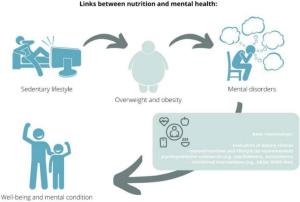
 In my practice as a therapist, I have had clients come to me for years for weight related issues. Outside of the physical problems one may experience, join pain, metabolic disease and skin conditions, a person’s mental health suffers. What begins with “I should lose weight” becomes a vicious cycle of disgust, disappointment and finally despair. Medicines are thrown at the problem of the subsequent depression and anxiety, and still the person does not get better.  

In a 2022 Article in Frontiers in Nutrition, a meta-analysis looked at the correlations between diet and mental health by examining 3,473 records, from which 356 sources related addressing these three questions: 

  1. Are there correlations between nutrition and mental health? 
  2. Are there psychoprotective food ingredients? 
  3. Are there nutritional interventions with proven preventive potential for mental disorders? 

This article pointed to how the relationship between “nutrition and patients’ mental status has been underappreciated, as evidenced by the lack of research conducted before the 21st century in this area of knowledge – cited in this review” (Gajek, et. al, 2022). The conclusion showed how this article pointed to how this trend has been reversed through increase research in psychodiettics. Through this research, correlation has been demonstrated between eating habits and one’s psychological status. This article stressed that we need to explore these correlations to create “potential opportunities to implement new effective dietary, pharmacological, therapeutic, and above all preventive interventions” (Gajek, et. al, 2022).  

Nutritional Psychiatry 

An emerging approach to psychiatry is incorporating the use of dietary changes to better mental health outcomes. This is a practice I was turned on to years ago when I stumbled onto how gluten can impact one’s mental health. This coincided with some behavioral issues my one daughter was having at the time. After eliminating soy from her diet and seeing modest changes, we eliminated gluten and saw everything behavioral wise take a turn for the better. These changes included decreased aggression and overall improved preschool markers that signified her readiness for grade school.  

Comparing the brain and body to a car, Dr. Selhub of Harvard University suggests that what you put into your body determines how your engine runs. This is something I tell my clients all the time, especially when we are considering medications.  

Dr. Selhub (Selhub, 2022) offers: 

If substances from “low-premium” fuel (such as what you get from processed or refined foods) get to the brain, it has little ability to get rid of them. Diets high in refined sugars, for example, are harmful to the brain. In addition to worsening your body’s regulation of insulin, they also promote inflammation and oxidative stress. Multiple studies have found a correlation between a diet high in refined sugars and impaired brain function — and even a worsening of symptoms of mood disorders, such as depression. 

It makes sense. If your brain is deprived of good-quality nutrition, or if free radicals or damaging inflammatory cells are circulating within the brain’s enclosed space, further contributing to brain tissue injury, consequences are to be expected. What’s interesting is that for many years, the medical field did not fully acknowledge the connection between mood and food. 

Before you consider a medication for your mood, depression or anxiety, consider first what you are putting into your mouth. Slight changes over several months can lead to significant changes in mood and if you add movement like 45 minutes a day of moderate intensity exercise, changes in body composition.  

Eating Meditation 

Eating better sometimes starts with learning how to eat mindfully. I want to share this well-known eating meditation from Thich Nhat Hanh: 

In Plum Village, we have a contemplation we recite before we begin to eat:  

  1. This food is a gift of the earth, the sky, numerous living beings, and much hard and loving work. 
  2. May we eat with mindfulness and gratitude so as to be worthy to receive this food. 
  3. May we recognise and transform unwholesome mental formations, especially our greed and learn to eat with moderation 
  4. May we keep our compassion alive by eating in such a way that reduces the suffering of living beings, stops contributing to climate change, and heals and preserves our precious planet. 
  5. We accept this food so that we may nurture our brotherhood and sisterhood, build our Sangha, and realise our ideal of serving all living beings. 

We tend to eat a little more slowly, to allow us to really savor every mouthful. We train ourselves to chew each bite at least thirty times, to allow us to really slow down and encounter the food, without rushing to swallow. When we can do this, we have a chance to touch peace and freedom right in the present moment. Many of us like to put down our cutlery between mouthfuls, to allow our hands to relax and to not race forward to the next bite while we still have food in our mouth. 

Reference 

Grajek, M., Krupa-Kotara, K., Białek-Dratwa, A., Sobczyk, K., Grot, M., Kowalski, O., & Staśkiewicz, W. (2022). Nutrition and mental health: A review of current knowledge about the impact of diet on mental health. Frontiers in nutrition, 9, 943998. https://doi.org/10.3389/fnut.2022.943998 

Selhub, E., MD (2022, September 18). Nutritional psychiatry: Your brain on food. Harvard Health Publishing. Retrieved February 3, 2024, from https://www.health.harvard.edu/blog/nutritional-psychiatry-your-brain-on-food-201511168626