The Spiritual Practice of You – Mindful Movement 


Well, we are a week into the first year! If you made a commitment to moving more and getting more exercise this year, how did you do this week? I was able to get up at 0530 most mornings and was able to get most of my training in.  

Twenty years ago, my life began falling apart. After finishing a Master’s degree for church work, my Conference told me that they were not going to recommend me for ordination based on my school not recommending me for ordination. What would unfold the next fourteen years was a career that was on life support until it finally died in 2016. I take most of the blame for this, my ADHD was not well controlled and contributed heavily to this failure.  

I am used to tough stuff. I grew up in the 80’s with ADHD and back then, it still was not as understood as it is today. Bullying by classmates and teachers was the norm. One of many things that came along with a lack of understanding was a limitation of my educational opportunities resulting in a math illiteracy that I still struggle with today. Losing my first career was just another setback among many that I had up to this point in my life.  

I took up running ultramarathons in 2010 to deal with the shitshow my life became because starting a new Master’s in 2008 and reestablishing my career was not enough. I would start medication in 2009 and this was a game changer in reestablishing my career. Between 2010 and 2020, I would complete 30 ultra marathons from the 50k – 100k distance. I would also complete 5 GORUCK Tough Challenges. In 2022, I rode my bicycle from Pittsburgh, Pa to Washington, DC. This endurance movement has been the core of my spiritual existence for the last 14 years.  

In 2021, I had COVID, and this has put a big dent in my ability to recover from longer events and I am still trying to figure out how to pull an endurance event over 12 hours together or training week over 10 hours without feeling like garbage. But this is just another mindfulness exercise.  

I have a deep contemplative practice that I started back in college when I was looking at the monastery as a career direction. Often, when I talk about mindful practices, folks will tell me it does not work. Often, they are referring to the practice of sitting and focusing on the breath. This practice can be excruciatingly frustrating as one has to continuously come back to one’s breath when distracted, that is the point. The other type of mindful practice is movement-based meditation. Here, one can garden, walk, paint, compose music, write, or in my case, run.  

In 2012, I came across an extraordinary Buddhist practice known as kaihōgyō or the spiritual challenge of endurance in pursuit of enlightenment. See https://fitonation.com/personal-growth/the-marathon-monks-of-japan-and-the-importance-of-suffering/ 

And https://medium.com/illumination-curated/the-marathon-monks-who-run-for-1000-days-or-commit-suicide-5988181334d 

These Buddhist monks commit to completing 1000 marathons or complete a suicide. At one point of their journey, they complete a double marathon a day for 100 days. Since 1885, only 46 men have completed this journey. The breakdown of their journey looks like this: 

1st year: 100 consecutive days of 25 mile runs, beginning at 1:30 a.m., each day after an hour of prayer. 
2nd year: 100 consecutive days of 25 mile runs. 
3rd year: 100 consecutive days of 25 mile runs. 
4th year: 100 consecutive days of 25 mile runs – performed twice for a total of 200 days. 
5th year: 100 consecutive days of 25 mile runs – performed twice for a total of 200 days. 
6th year: 100 consecutive days of 37.5 mile runs 
7th year: 100 consecutive days of 52 mile runs and 100 consecutive days of 25 mile runs. 


At the peak of my training in 2016, I thought it would be fun to try and do 100 days of consecutive runs, but I thought better of it. But why do this? I was listening to David Goggins recently and if you just landed on earth and do not know who David Goggins is, just Google him, and you will find out. What David was talking about essentially was about the growth he has gained in suffering through all the extreme endurance events and career decisions he has engaged in.  

I believe there can be growth in suffering. Too often we want to focus on post-traumatic stress, but what about post traumatic growth? The cliche is that fire strengthens steel, but doing hard things often can strengthen the mind. In therapy, we often talk about how if you do not want to do something, like coming to therapy, overcoming a compulsion, or even fixing disordered eating, the biggest step is doing the thing you do not want to do.  

Lots of podcasters and high level and influential people will say a lot of things about getting after it, embracing the suck but Nike had it right all along, “Just Do It.” There is no magic to working hard. Focus on the process, start with an end in mind and stay front sight focused as we used to say in the military.  

A lot of people think I am crazy or misaligned when they hear I go out for a 4-hour run starting at 0600 on a Saturday morning. I have heard, “wait till you get older,” or “what about your knees.” You know what? I am older, a little less bolder, but that brings us to the second point, which is actually two. Minimize distractions and have contingencies. In 2013, after an accident at work, I herniated a disc, knocking out my entire season, 5 races in total with my first 50 miler on the list. For 18 months, I did not run much more than a few miles a week. I attempted a 40k in September and only completed a 20k. Also, my knees do hurt sometime, but that is because I am 46 years old, and I have done a lot more than running in my life or I need to stretch and do some mobility work.  

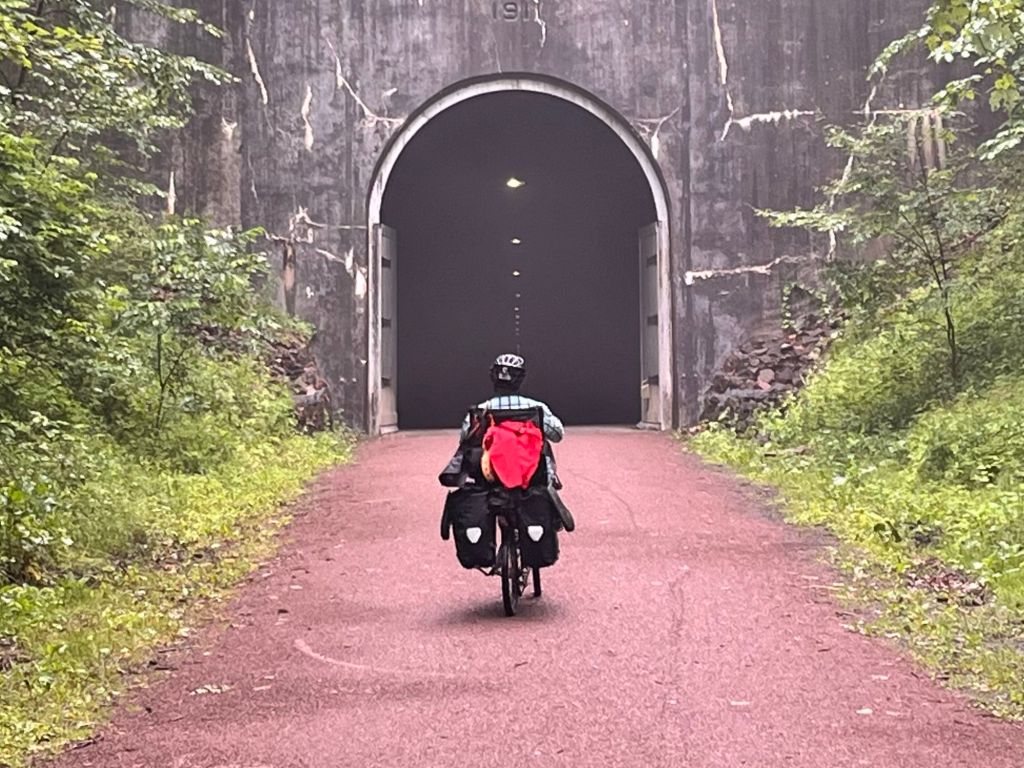
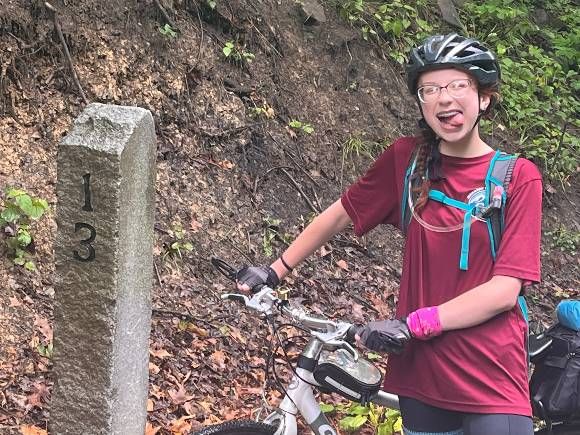
I do not run because I want to, I run because I have to, it is my medication for my ADHD. As COVID has messed with my ability to complete longer stuff, I have transitioned to what I can do, shorter events, more biking. I completed a 150-mile bike pack with my 13-year-old last summer. If you are struggling with your weight, your mental health, or some other malady, get off the couch and do what you can do. The spiritual practice of you is a journey of mindfulness. We can learn a lot from the Tendai monks. We can emulate their positivity. There is nothing easy about running one mile let alone 25, 32 or 62 or beyond. This is true dealing with anxiety, depression, or some physical health condition. But what we can do is create a positive attitude, regardless of how small. By focusing on the positive, we push ourselves into a more spiritual realm. To do this, we must allow ourselves to open our senses to the sights, sounds and smells of our environment.  
 

Considering mystery, a spiritual practice 


Why do we believe what we believe? Why is there a higher power? For that matter, why is the sky blue? As I have been playing around with this question this week, a couple of notions came to mind: immanence, mysticism, and mystery. Trying to figure out how these all go together has been a contemplative journey this week.  

Spirituality and religion are a mystery as over the thousands of years these concepts have wrestled with their existence. I tend to believe that humans are creatures that use symbols and meanings to explain the world around us. I once heard that in premodern times, atheism would have been nonexistent. This makes sense when one looks at the idea of the Axial Age and the controversial notion of the precameral mind.  

I have engaged in contemplative practice over the entirety of my adult life, 25ish years now and there have been moments that I would consider mystical, times when I felt closest to God. The birth of my children was one of those events. I remember feeling our fist born kick for the first time and realizing how drastically our lives would change. Thunderstorms and mountaintop vistas rank up there for me. Preaching and helping one establish an intimate relationship with the divine also were experiences that I found mystical.  

What is this notion of mystical? Do you have to be some sage that sits on a cushion or a relgious person that locks themselves away in a hermitage? I do not believe so. I do believe though that one must be more intentional with their faith journey and learn to move beyond the bonds of a prescribed faith. The notion of mysticism is simply becoming one with God. In some experiences such as what the natives here would have experienced on a vision quest, St. Teresa of Avila and John of the Cross experienced, these experiences can be ecstatic or can be altered states of consciousness 

While I have never experienced altered states of consciousness except for a few times when I was sleep deprived in the middle of a 12- and 23-hour event, I can attest that consistent contemplative practice and goal to understand God’s presence in my life has brought more than a few mystical experiences in my life. To be clear, I consider myself a contemplative and not mystic. There are distinct practices and experiences that bring one into a mystical union with the divine. I have had just fleeting glimpses.  

The spiritual practice that goes with accepting a mystical experience is the practice of mystery. When one engages in the acceptance of mystery, the word acceptance here is important. In my practice as a Christian pastor, I would often bump into people who would look down upon the idea of mystery because it felt too close to the supernatural or demonic or even Pagan. I even recently had a student tell me that they were not allowed to read the Chronicles of Narnia because it was not Christian! But, when one can get their head around the idea that mystery exists in our Christian faith, we come to cherish the unknown, the hidden and inscrutable aspects of our faith.  

A word that comes to mind when thinking about mystery is paradox. The very idea of believing in any type of deity is a paradox, it is an absurd idea. Then we tied into the idea of a deity having a child with a human and that human child becomes a God himself? Crazy. But when we give up the idea that we can always get it, we open ourselves up to the practice of mystery and then to the experience of mysticism.  

So, this God thing that religious folks go on about? For my, in the cultivation of an owned faith, I see God as a transrational being and my faith is the subjective experience with this transrational being. I believe that God is immanent, here, now, revealing and most of all, love. Love is at the heart of God.  

Consider these words from Henri Nouwen on your journey this next week,  

Dear God, I do not know where you are leading me 

I trust you will put your hand in mine and bring me home 

Thank you, God, for your love  

Say this to yourself every morning, allow your eyes to be opened, your feet to guided, and then see where the day takes you.  


The Spiritual Practice of You: Managing Seasonal Affective Disorder

Many biblical scholars like to speculate on the themes of depression in the bible. When I was in seminary, we would often point to David, who if you read the Psalms which are attributed to him and some of the other accounts seems clinically depressed. Context matters though and we must consider the geopolitical and sociocultural events happening at the time of David to really appreciate his position. I could spend the rest of this discussion exegeting all the instances of “depression” in the bible, but what is important is that it more than likely existed and for many today, it is a real problem.  

I am back at work today; it is the Tuesday after Christmas and much of our conversations today are about the holidays and how perhaps they were not as happy as some would have liked. If you are reading this from somewhere other than the Northeast of America, you may or may not be aware of the impact the long dark winters and limited sunlight have on folks up here. Diagnostically, we call this Seasonal Affective Disorder or SAD which can affect up to 5 percent of the population in North America. 

Seasonal Affective Disorder

According to the National Institute of Mental Health:  

Symptoms of depression can include: 

  • Persistent sad, anxious, or “empty” mood most of the day, nearly every day, for at least 2 weeks 
  • Feelings of hopelessness or pessimism 
  • Feelings of irritability, frustration, or restlessness 
  • Feelings of guilt, worthlessness, or helplessness 
  • Loss of interest or pleasure in hobbies and activities 
  • Decreased energy, fatigue, or feeling slowed down 
  • Difficulty concentrating, remembering, or making decisions 
  • Changes in sleep or appetite or unplanned weight changes 
  • Physical aches or pains, headaches, cramps, or digestive problems that do not have a clear physical cause and do not go away with treatment 
  • Thoughts of death or suicide or suicide attempts 

For winter-pattern SAD, additional symptoms can include: 

  • Oversleeping (hypersomnia) 
  • Overeating, particularly with a craving for carbohydrates, leading to weight gain 
  • Social withdrawal (feeling like “hibernating”) 

For summer-pattern SAD, additional symptoms can include: 

  • Trouble sleeping (insomnia) 
  • Poor appetite, leading to weight loss 
  • Restlessness and agitation 
  • Anxiety 
  • Violent or aggressive behavior 

Winter-pattern SAD should not be confused with “holiday blues”—feelings of sadness or anxiety brought on by stresses at certain times of the year. The depression associated with SAD is related to changes in daylight hours, not the calendar, so stresses associated with the holidays or predictable seasonal changes in work or school schedules, family visits, and so forth are not the same as SAD. 

The standard protocol for treating SAD or any type of depression is Cognitive Behavioral Therapy and, in some cases, medications. As an integrative health practitioner, I also promote improvements in diet, exercise, and sleep.  

Finding Relief

In the next few paragraphs, I would like to break down several of these elements of self-care that you can take if you are experiencing SAD symptoms or even depression symptomatology. Each of us is a work in progress. We have not arrived; we are in the process of becoming. Just because you may be feeling blue or sad today or even if you have been feeling this way for a while, there is HOPE, there is HELP. The spiritual practice of YOU challenges you to see yourself as a son or daughter of God, or the divine reality. With God, we are co-creators of God’s greatest work, humans.  

Diet– I find that the research is very robust when it comes to diet and mental health. From eating foods high in Vitamin B and during the winter season, talking to your doctor about your vitamin D levels are two well-known examples of how your diet can play a role in your mental health. Lesser supported claims can be found around wheat/ gluten sensitivities.  https://www.health.harvard.edu/blog/nutritional-psychiatry-your-brain-on-food-201511168626

Sleep – lack of sleep makes it hard to cope or deal with difficult emotions. One of my most frequent lines to clients when working with children is asking if the child or the client is tired as this can make an enormous difference in how one deals with an obstacle or stressor in life.  https://www.columbiapsychiatry.org/news/how-sleep-deprivation-affects-your-mental-health

Exercise – Movement is perhaps the healthiest tool one has in their wellness toolbelt. From regulating blood sugars, to improving mobility, increasing blood flow and many others, exercise is a lifestyle decision all must engage in at all ages to improve health. Exercise can improve overall mood, lower anxiety symptoms, and improve overall confidence.  https://www.health.harvard.edu/mind-and-mood/more-evidence-that-exercise-can-boost-mood

Therapy – the kind of therapy I practice is known as dynamic psychotherapy. Here, I engage sometimes as a surrogate for the client, often playing the role of a parent or an elder, often mimicking the attachment that the client did not receive in an earlier part of life. In the pandemic of mental health concerns, a lot of people have a lot going on. It is okay to talk to someone. It is not a sign of weakness. At one point in our history, we had elders, teachers and parents who were engaged in the wholistic, meaningful growth of our children. Many of these institutions have either gone away or have become so polarized that people have turned away from them. The therapy office can become that safe space to ask dangerous questions and explore one’s self.  

Final Thoughts

“A thoroughly good relationship with ourselves results in being still, which doesn’t mean we don’t run, jump, and dance about. It means there’s no compulsiveness. We don’t overwork, overeat, over smoke, over seduce. In short, we begin to stop causing harm”. – Pema Chodron in When Things Fall Apart 

I am often teaching Loving Kindness or meta mediation/awarenesses to my clients during times when they are crushing their sense of self through self-sabotaging behaviors, self-deprecating statements or being plain hard on themselves. In this space of meditations, I ask my client to consider holding themselves and consider these words, “may I be safe, may I be happy, may I be free from harm”. 

Consider this and see yourself as the gift from God that you are, the potential seat of Christ.  

Reference: 

National Institute of Mental Health (n.d.). Seasonal Affective Disorder. Mental Health Information. Retrieved December 26, 2023, from https://www.nimh.nih.gov/health/publications/seasonal-affective-disorder 

Considering the New Year: The Spiritual Practice of Imagination 


As we close out 2023, I look back on the year. One of the hardest pills for me to swallow this year was the complete realization that my longer trail race days are over. While I still believe that I can do 50k and beyond, having COVID seemed to do something to my ability to recover from these longer events that is rather unpleasant. It has been almost 4 years since my last 50k.  

What an Adventure! 

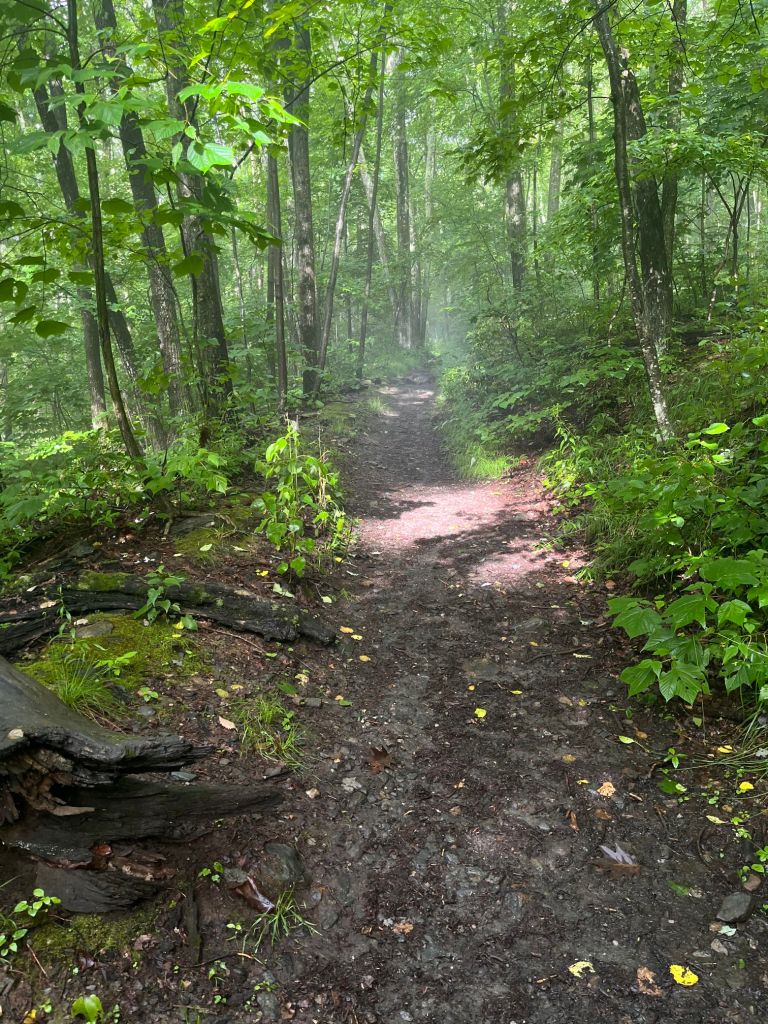
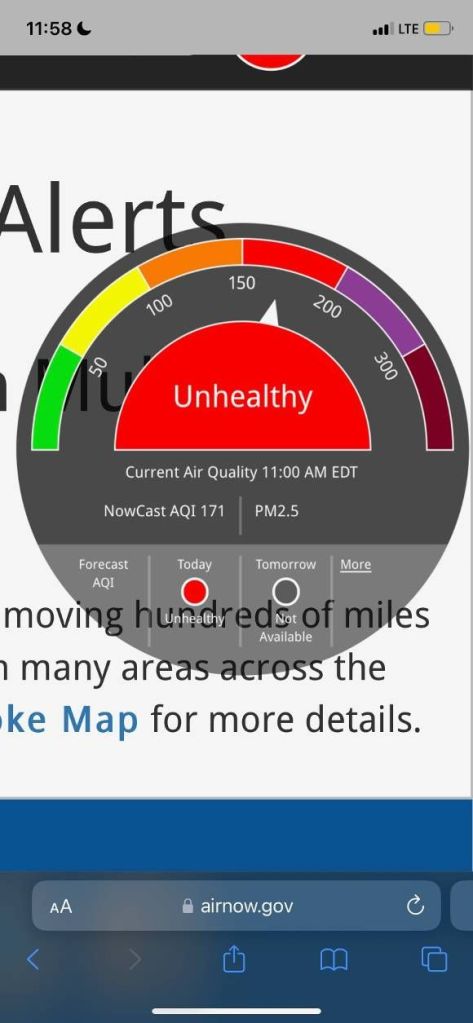
This year I have covered one thousand eight hundred and seventy-three human powered miles and spent around four hundred hours and thirty –two minutes active. Some of the more memorable events this year were my attempted thru hike of Connecticut with my sixteen-year-old and the thru bike I rode on the Great Allegheny Passage with my thirteen-year-old. Because of the forest fires in Canada, our thru hike of the Appalachian Trail in Connecticut did not happen, but we had an enjoyable time anyway. My thirteen-year-old crushed the one hundred fifty miles of the GAP trail. For family trips, my eighteen-year-old graduated from High School this year and wanted to go back to Cape Cod as her graduation gift and our whole family joined my wife’s extended family on a weeklong vacation in the Poconos which included an epic white water rafting trip.  

My fitness goals this year were to maintain training levels for a Master’s level athlete, 7-10 hours a week, which I largely kept throughout the season. I added two a week weightlifting session.  

Professionally 

This year, I undertook trying to maintain seeing thirty clients per week, blog more, and do more with my personal training and teaching. In the spring, I taught a sociology class, and, in the fall, I taught World Religions again. In September, I switched my blog platform to Patheos. I never really got the personal training off the ground and will try again in 2024.  

I have yet to find traction with any church that will work with me, and this continues to be an ongoing goal, though I have largely given up on this one. The conservative ones say I am too liberal or progressive and the progressive ones say I am too deist, traditional or too much of a therapist. 

Imagination 

The practice of imagination is not one you may think of when it comes to spiritual practices. Closely related to this practice is the practice of wonder. I find these two practices to be more mindful awareness practices. The practice of imagination enhances creativity, and the practice of wonder enhances sensuousness. Wonder comes alive in the imagination. We are animals dependent on our imagination. It creates the symbols that create our language, our devotions and our creativity. Imagination is an inner reality and wonder drives us deeper into ourselves.  

I am fond of the writings of Richard Rohr. He has this to say of wonder (Rohr, 2020): 

Wonder is our birthright. It comes easily in childhood—the feeling of watching dust motes dancing in sunlight, or climbing a tree to touch the sky, or falling asleep thinking about where the universe ends. If we are safe and nurtured enough to develop our capacity to wonder, we start to wonder about the people in our lives, too—their thoughts and experiences, their pain and joy, their wants and needs. We begin to sense that they are to themselves as vast and complex as we are to ourselves, their inner world as infinite as our own. In other words, we are seeing them as our equal. We are gaining information about how to love them. Wonder is the wellspring for love. . . . 

2024 

I believe we have a challenging year coming up. Political anarchy, extremist religious ideals, racist ideologies and a growing gap between the haves and have nots are going to be center stage next year. Perhaps a bit cliched, but I think of John Lennon’s song, “Imagine”. Imagine he writes, people living. For peace. For today. As one. 

The top of the year is always filled with narcissistic and self-centered goals to make our lives better, to get a better job, to lose weight and so on. But what if we instead made a goal to just be better to each other.  

The spiritual practice of Imagination as prescribed by Mary Ann and Frederick Brussat challenges us to keep track of images that come to us spontaneously in association with our thoughts and feelings.  

I believe Jesus imagined a better world and he was not afraid to speak of this better world. Perhaps the greatest person to ever be canceled by a government for speaking words to his imagined reality. Imagine then in 2024, peace, love, unity. What emotions does this bring up? Feelings? In mindfulness work, we talk about noticing. When you think of your “other” or “those immigrants” or “those whoever comes to mind”, imagine, wonder, how are you any different? In reality, you are not. In lovingkindness work, it is the imagining of the other as a small child or baby longing for comfort that eventually shifts our mind to an attitude of acceptance.  

God’s peace to all on this run around the sun. 


Reference: 

Rohr, R. (2020, August 13). ORDER, DISORDER, REORDER: PART ONE Awe, Wonder, and Love. Retrieved December 22, 2023, from https://cac.org/daily-meditations/awe-wonder-and-love-2020-08-13/ 


Christmas 2023 – A Reflection 


To be honest, I have never been a huge fan of the Christmas holidays. As a kid growing up with ADHD, it was never a pleasant time. Usually there was a lot of chaos and in the 80’s, ADHD was still not as understood as it is today. By the time we got to my second set of grandparents’ house, my meds were wearing off and I was tired, overstimulated and in serious need for a break. All things I would not come to understand until I was an adult and working in the mental health field. We famously say in my paternal family, we put the fun in dysfunctional and it was not a family gathering until someone was crying or hollering at someone. That aside, I have never been a fan of the myth of the Christmas season.  

I could create a laundry list of things wrong with the Christmas holidays – fake smiles, a longing for the good old days, even coercion to be on our best behaviors or we get a lump of coal or worse if you do the whole Krampus thing. If we take a deeper dive into the history of the holiday season, which now runs from Thanksgiving through the New Year, we will see rich and diverse religious expressions of faith.  

The four weeks in December that mark the Advent and Christmas season is truly a cross cultural and cross religious holiday season, encompassing Judaism, Christianity, and Pagan religious practices. I would argue that this season if looked at and understood better is more Jewish and Pagan theologically and philosophically than Christian, which is a much younger expression of this season.  

On December 21, the world celebrates the longest day with the winter solstice. These days, you will be hard pressed to find original, prehistoric practices of how the European religions may have celebrated this day. All have been supplanted by modern, neo pagan practices that embody the spirit of the original practices. You can find a great article from a source I use when I teach Paganism in my religion classes here: https://www.learnreligions.com/about-yule-rituals-2562970. Many of the rituals of the winter solstice are the same seen in traditional Christian practices of Christmas, blessings, tree lightings, candle wreaths, and rituals of preparation. In the Yule ceremony, there is a celebration over the return of the sun.  

From Friday, December 7th of this year till the 15th of this year, the Jewish people celebrated their annual Festival of Lights or Hannukah. Hanukkah celebrates two miracles that happened in Judea in 139 BCE: The Jewish Maccabees beat the Syrian-Greek invaders, and a small jar of oil burned for 8 continuous days in the Temple menorah instead of just one. 

In the spirit of “Happy Holidays,” what then do we make of our posture during this season? In a world where greed and consumption consume our every waking moment for the eight plus weeks of the season, what can we take from the traditions in which we celebrate this season?  

In all these traditions, it is the celebration of life, the movement of time, providence, and community. A couple of weeks ago, writing on Victor Frankl’s book, “Man’s Search for Meaning,” I offered this: 

Love is the only way to grasp another human being in the innermost core of his personality. No one can become fully aware of the very essence of another human being unless he loves him. By his love he is enabled to see the essential traits and features in the beloved person; and even more, he sees that which is potential in him, which is not yet actualized but yet ought to be actualized. Furthermore, by his love, the loving person enables the beloved person to actualize these potentialities. By making him aware of what he can be and of what he should become, he makes these potentialities come true.” 

In the Christian tradition, we elevate Jesus to the place of divine. It is the Christ, the divine essence of love that was so present in Jesus we need to celebrate. We all hold the potentiality of Christ in all of us. Until we fully recognize this potential in all we encounter, then we will never fully worship Jesus for all he brought into this world. Jesus came to us somewhere in the range of 2000+ years ago to a Jewish immigrant family in a world punctuated by suffering. As part of our Advent celebration, we celebrate hope, but we always look at it from our Christian perspective and not from Jesus’ Jewish perspective.  

Hope for Jesus was essential to his Judaism. “To be a Jew is to be an agent of hope in a world serially threatened by despair. Every ritual, every mitzvah, every syllable of the Jewish story, every element of Jewish law, is a protest against escapism, resignation, or the blind acceptance of fate. Judaism is a sustained struggle, the greatest ever known, against the world that is, in the name of the world that could be, should be, but is not yet. There is no more challenging vocation. Throughout history, when human beings have sought hope, they have found it in the Jewish story. Judaism is the religion, and Israel the home, of hope” (Sacks, n.d.). For those digging into the traditional Pagan celebrations of Winter Solstice, hope is central as they celebrate the potentiality of new beginnings and the hope for a prosperous year.  

To bring it all together, as we gather this weekend for our annual Christmas gatherings or this Thursday for our annual Winter Solstice, instead of focusing on gifts given or not gotten, instead, look intently into the faces of those gathered. I often say in my work as a therapist, listening with our eyes is more important than listening with our ears. What truly are you hearing this season? 


Reference: 

Sacks, J. (n.d.). How the Jewish People Invented Hope. My Jewish Learning. Retrieved December 18, 2023, from https://www.myjewishlearning.com/article/how-the-jewish-people-invented-hope/