The Spiritual Practice of You: 

Shadow Work 


Allegory of the Cave 

I am teaching an Intro to Philosophy course in a couple of weeks and one of the stories I will be having my students look at is Plato’s classic Allegory of the Cave. If you have not read this, you can find it here: https://faculty.knox.edu/fmcandre/allegory_cave.pdf  

People mistake the appearance of what is in front of them as reality and live in ignorance (quite happily, for ignorance is all these people know). However, when parts of the truth start to emerge, it can be frightening and can make people turn back. If one does not turn away from the truth and continues to seek it, he will have a better understanding of the world around him (and will never be able to return to that state of ignorance). The freed prisoner represents the philosopher, seeking a greater truth outside the perceived reality (Kleinman, 2013). 

Sometimes, what we perceive to be our true self is just an illusion to who we really are. Dissonance happens when we have an existential crisis of meaning where we feel like we are different from whom we are perceived. In the same experience of the cave, when the truth of our selves is momentarily exposed, we can develop resistances that can lead to depression and anxiety over this revelation.  

As a pastor, I believe that we are all God’s beloved. We are worthy of love and respect and dignity. As a therapist, many people come to me to wrestle with this reality.  

Carl Jung 

Carl Jung was a Swiss psychiatrist and psychoanalysis whose work contributed largely to the field of psychology in the 20th century. Among the many ideas he posited, shadow work came from the belief that everyone had a shadow side that we repressed from childhood. Jung further believed that the shadow was associated with our negative emotions. Jung’s approach was to embrace rather than ignore this presence. By doing so, by embracing our shadow side, we can begin to truly know ourselves. 

Jung believed that the human psyche was made up of three components: 

The ego — is what we are consciously aware of when we think about ourselves. 

The personal unconscious — all the information in someone’s mind that is not readily available to consciously recall. 

The collective unconscious — another form of the unconscious, but one that is common to all of us. 

We begin to do shadow work when we learn to become aware of our unconscious self and recognize how it manipulates or drives our conscious self. Often, Socratic questioning is employed along with other therapeutic techniques.  

Internal Family Systems 

Tied to the notion of shadow work but unrelated, Internal Family System is “a transformative tool that conceives of every human being as a system of protective and wounded inner parts led by a core Self. We believe the mind is naturally multiple and that is a good thing. Just like members of a family, inner parts are forced from their valuable states into extreme roles within us” (see https://ifs-institute.com/ ). It is one tool that helps us become aware of our unconscious self.  

As we can see from these two approaches is the idea that who we see ourselves is not always who we really are. As a therapist trained in humanistic psychology, I deeply understand how our family systems influence our development and shape our sense of self. The old stereotype of the therapist telling you that all your problems stem from your family is true. We are the people our parents shape us to be. It can take years of therapy with either IFS, or shadow work or just plain CBT to get someone to come around and accept their true self and their true purpose.  


The Spiritual Practice of You 

Each of us is a work in progress. Engaging in the spiritual practice of you cultivates an awareness of the divine love in which we were all created.  

Consciousness vs. Unconsciousness  

Shadow work is also spiritual work. To get our heads around this, we need to turn back to the ideas of consciousness verses unconsciousness as noted above.  

Consciousness is essentially everything that’s in front of you. It’s everything that you see, smell, touch, taste, and feel. It also includes all the thoughts that you’re aware of, as well as your beliefs. 

Your unconscious is the opposite. It is essentially everything that is not in front of you. It is everything that you are not aware of. 

The most significant difference between the conscious and the unconscious is that the conscious is actually very limited. One is aware of what they are conscious of. Your unconsciousness is limitless and is everything you are not aware of.  

As a practice for therapy, helping clients become aware of how their unconscious thoughts influence their being is a big aim in my work. For this, I use the noted modalities listed above but also Eye Movement Desensitization and Reprocessing (EMDR), Cognitive Behavioral Therapy (CBT) and other mindfulness techniques.  

As a practice for spirituality, helping one understand their true self in relationship to their faith tradition. In Christianity, it could be helping one actualize their Christ nature. In Buddhism, their Buddha nature, in Islam, it is recognizing your divine nature.  


Reference: 

Klienman, P. (2013). Philosophy 101: From Plato and Socrates to Ethics and Metaphysics, an Essential Primer on the History of Thought. Adams Media. https://www.amazon.com/Philosophy-101-Socrates-Metaphysics-Essential-ebook/dp/B00EKPKRPO/ref=sr_1_1?crid=1NK28D9WMEOXV&keywords=philosophy+101+paul+kleinman&qid=1701359454&sprefix=Paul+Kleinman%2Caps%2C327&sr=8-1 


Before you go…  


The world is complicated, but Love Opens Doors strives to help you understand it. Each week, I am putting out 2 articles a week ranging from health to spirituality from theology to philosophy and from Church history to ethics. Each week, I put many hours in a week to create insightful, enlightening and meaningful content to share with you. Sign up for my free newsletter to get these articles in your inbox each day.   


Strong Women 


Girl Dad 

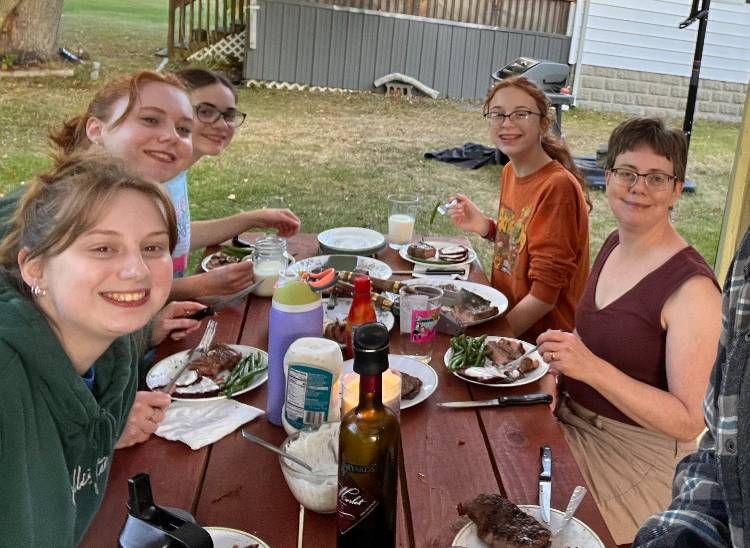
I am a girl dad. I have been one for 21 years. Four girls. Badass women of strength, courage and love. My wife is pretty badass too. She is working on her Master’s degree right now.  

I am surrounded by strong women, mostly, two of my kids are out of the home for college right now.  

When I was a young pastor, my wife and I were really into Proverbs 31 (https://www.biblegateway.com/passage/?search=Proverbs+31%3A10-+31&version=NRSVUE) and while I am a lifetime away from that 24-year-old pastor and I do not hold the same patriarchal values that I used to apply to this text, I think there are some parts that still apply today. This however is not going to be a rehash of old sermons on this, I think we need a fresh new look.  

Proverbs is part of the Jewish scripture known as the Ketuvim and was possibly written somewhere around the time between the 7th and 4th century BCE. What we must consider here is the role of women for this culture as the words were not written for us modern folk in mind.  

A Historical Context 

Ancient Israel was a patriarchal society. A woman’s experience in this system was varied depending on which century we are looking at. It is agreed that a woman’s life centered on her family.  

While there were boundaries placed on where a woman could appear, women engaged in commercial transactions and could own lands and bring cases to court.  

Women during this time appear to have been able to attend religous ceremonies The religious lives of ordinary Jewish women are difficult to reconstruct. Jewish texts from the period, written exclusively by men, offer little information about the experience of actual, historical Women shared many religious obligations with men, but were exempt from many significant time-bound commandments, for example regular play at a fixed time.  

Looking at what we find in the New Testament period, we can see Jesus continue these same traditions in the way he is described how he treats women.  

If we expand our views to Islam, we will see very similar orientations around the role of women. It is to be noted, that what we often see in popular media is a radicalized view of Islam and does not always reflect the traditional views one may observe in a traditional Islamic home.  

In its context, Proverbs 31 is an exclamation of how much less stress the writer feels to not have to worry about his home so that he can go about the work that he needs to complete in society. It is not a script for how a woman should act for her husband to make him a better husband. This is broadly a modern interpretation and has no bearing on the cultural aspect of this piece of scripture. Both husband and wives have jobs in respect of their position in their societies. Hers is to run the household and his is to run society. Today, however, it is different. Both can run society, and BOTH can stay home and run the home. There is no prescription in the bible that states that for modern people, that a man does one thing, and that woman does the other.  

In marriage work, I teach couples to learn how to mutually work together to run their homes and life so that they can build up each other and their marriage and families.  

Empowering Women 

Friday was International Women’s Day. Every day, I am surround by women, at my office and in my home. I wake up to currently 2-3 beautiful women and I end my day with several awesome women. Women have given me some of the best direction in my life.  

It feels like a woman’s role today continues to be constricted by ignorance and a culturally appropriated message lifted from select passages from the Bible. A woman’s place is to not only to be an ally with her partner but also to be a strong independent force on her own.  

As a girl dad, I have watched my strong girls grow to strong woman. I have both taken a back seat and have been an ally in their growth. As men of faith, we must do the same for the strong women in our lives.  

Here are five ways we can empower the women in our lives: 

Be a better listener. In therapy speak, this is learning how to actively listen. Here, you are doing more than listening, you are hearing what is being said and asking open-ended questions, clarifying questions and making affirming statements. 

Encourage independence. A key response I coach couples when trying to navigate a problem their partner is having, is this “do you need me to fix or do you need me to listen?” 

Secondly, when my wife decided she wanted to go after her Master’s, I was all in and threw all of my support after her. When she struggles, I can offer her some of my experiences, but mostly, it is encouraging her to lean on her own abilities and not be afraid to try something different.  

Check your stereotypes and biases. I have worked in a lot of small towns and still live in small towns. I will gladly call someone out when they say, “You know how women are”. Change starts when we stop being complacent.  

Expressing care and gratitude. Encouragement begins at home. Show your appreciation to the girls and women in your life. A thank-you note, a helping hand, or a heartfelt conversation can make a world of difference. 

Advocacy. We need to write to our political leaders and our religious leaders advocating for women’s rights. Unfortunately, today there is a strong narrative against women’s rights and even reversing hard fought rights gained by women. As a girl dad, it hurts to see that my girls cannot enjoy the same safety and freedoms that I take for granted.  


On Hospitality 


Chapter 53: The Reception of Guests 

The Rule of Saint Benedict is quite clear when it comes to guests. Borrowing from Mathew 23:25, this chapter opens that all guests are to be welcomed as Christ. I find the wording of Mathew 23:25 and the use of this verse theologically significant as to how we are to treat guests. In other places, for example in the transfiguration story, we get a vision of Moses and Elijah, but here, we are called to open our hearts to potentiality of Christness in our guests. In my spiritual walk, I equate Christness as divine love and see Jesus as a figure who had such a profound relationship with God, that we cannot distinguish the two from each other. All people are potential seats of Christ.  

Jewish Notions of Stranger 

The Old and New Testaments are full of stories about people being welcomed into people’s homes, people caring for sick people and many stories about community. While from a Christocentric viewpoint, we may point to Jesus in the New Testament and prophecies pointing to Jesus in the Old, the explanation is a bit simpler. The Old Testament largely is the cannon of scriptures used by the Jewish people, of whom Jesus was a part of. It would make sense then that many of the stories in the New Testament look Jewish.  

Hospitality is an integral element of the spirituality in the Jewish faith. The Talmud tells us that welcoming guests is “greater than welcoming the Divine Presence [Shekhinah].” In Hebrew, hospitality is known as hakhnasat orchim and is recognized as the most important value in Judaism. This is clearly evident throughout the Gospel stories as we see how Jesus greets strangers, eats with strangers, and challenges the systems that create strangers in the Jewish communities he habitated. (See this article from My Jewish Learning: https://www.myjewishlearning.com/article/jewish-hospitality/)  

A final word about hakhnasat orchim is this: “When one knows of strangers who are hungry or need a place to relax, it becomes a legal obligation. Some rabbis consider hakhnasat orchim (literally the “bringing in of strangers”) to be a part of gemilut hasadim (giving of loving kindness).” (https://www.jewishvirtuallibrary.org/hospitality-in-judaism#google_vignette).  

Who is Our Neighbor -How Our Ideologies Cultivate our Opinion of Who is a Stranger 

Right now, we are living in a weird space in America. We are observing a trend where less people are going to church and those who are attending are becoming more radicalized. I want to sit with the notion of radicalization for a moment and discuss how it keeps us from loving our neighbor as Jesus would have wanted.  

Radicalization is the process by which an individual or a group comes to adopt increasingly radical views in opposition to a political, social, or religious status quo. The ideas of society at large shape the outcomes of radicalization. In America, I can ride my bike through the back roads and see signs that say that Trump is Jesus. Or God Bless Trump. We have always been a racist country, though your history books will tell you otherwise.  

Jesus was clear, love you enemy, love your neighbor. Paul makes it clearer in Galatians 3:28: “There is neither Jew nor Gentile, neither slave nor free, nor is there male and female, for you are all one in Christ Jesus.” (NIV). We are all one. One love.  

Hospitality – A Spiritual Practice  

I have the Pali word, Namaste tattooed on my right wrist. Namaste means “the presence of the divine in my bows to the presence of the divine in you.” I have translated this, “the presence of Christ in me bows to the presence of Christ in you.” It is my daily spiritual practice of hospitality to keep Chapter 53 of the Rule of Saint Benedict at the front of my conscience as I work with each client I see each day. 

I practice what is known as deep ecumenism. First coined by Mathew Fox and expanded upon by Rabbi Zalman Shcaccter-Shalomi, deep ecumenism challenges us to see the potential for learning and growing from other spiritual traditions and leaders from other traditions.  

Cultivating a deep ecumenism helps in the spiritual development of hospitality by challenging us to accept pluralism as a natural condition in the world. When we can understand and get our heads around the idea that God not only created for Christians, but also for Jews, Hindus, Buddhists and Muslims, then our world gets a little smaller.  

We can dismantle the radicalization in our communities by beginning to see the Christ in all people, bowing to the presence of Christ. Seeing that their suffering is or can be our suffering.  


Thoughts on Aging

We are born weak and defenseless, we die weak and defenseless. In the time in between, we have an unlimited capacity to love.

My dad turned 76 last week and it really put things into perspective for me. I suspect I will have my dad around for at least 12 more years, given his dad hung around till his late 80’s and my grandma died at 91.  

As a pastor, I have assisted many families through the dying process, to think about this for my family, it seems incomprehensible. With both my mom and dad and my in laws, we have been having the talk about estates for a couple of years now.  

The “Oreo” Generation 

I am now in what is known as the “Oreo generation”. This is a time when one is squeezed between the needs of adult children and aging parents. Also known as the sandwich generation, this is the period of time when middle aged individuals divide their time caring for aging adult parents and raising their own children. While my parents and my in laws are still able and independent, the worry has increased some over the last few years.  

For some families I have worked with, the challenges of getting aging parents to appointments, care for their own children and maintaining a full-time job can be insurmountable. The stress can lead to anxiety, depression, couples concerns and financial issues.  

Some statistics for the Sandwich Generation (Fleming, 2022): 

Over 40 million people work as unpaid caregivers for someone age 65 or older. 

Caregivers in the sandwich generation experience exhaustion, stress, and depression caring for kids and elderly parents. 

It’s critical that caregivers find ways to decompress and support their mental health. 


Memento Mori 

Our modern society has a weird relationship with aging. Up to thirty years ago, it was believed that older people could not exercise or engage in physical activity. One of the many things that started me on my fitness journey was an advertisement in a health magazine. In this advertisement was an old man holding a baby. The marketing line was this: “You are born weak and defenseless, and you will die weak and defenseless, how you look in between is up to you.” 

The Stoic philosopher Marcus Aurelius had a different relationship with death.  

Marcus Aurelius writes in his Meditations: 

“Loss is nothing else but change, and change is Nature’s delight.” Your parents are changing, as is your relationship with them. This is a natural part of life’s flow, a chance for you to demonstrate your love and respect in a different manner. 

Aurelius grew to be an old man after tasting the sting of death. In his lifetime, he would lose his parents at an early age, several of his children and his empire experienced a tragic flood and subsequent famine after food stores and crops were ruined. 

On aging, Seneca offers us these words: 

“Life is divided into three periods, past present and future. Of these, the present is short, the future is doubtful, the past is certain. For this last is the one over which Fortune has lost her power, which cannot be brought back to anyone’s control. But this is what preoccupied people lose: for they have no time to look back at their past, and even if they did, it is not pleasant to recall activities they are ashamed of.” 

Faith and Aging 

The Calypso prophet, Jimmy Buffett once sung that the wrinkles only go where the smiles have been. Our faith can age with us and sometimes this can be a stressor especially when loved ones and friends leave us.  

Our faith like our minds change as we get older. For years, I have applied the developmental theories of faith posited by James Fowler and John Westerhoff who suggest that our faith goes through periods of development much like we do when we go through cognitive development. Fowler proposes seven stages of faith and Westerhoff four. For the sake of this discussion, I will look at Westerhoff’s  

Westerhoff’s owned faith stage and owning and accepting one’s aging body.  

Westerhoff’s last stage of faith development looks at the owned stage of faith. In this last stage of develop which is rarely reached before adulthood, one will or may experience profound doubts that will or can lead to profound enlightenment. I have seen this paralleled with the several existential crises individuals go through in their thrities and late fifties.  

Once one arrives at this stage, our faith becomes our own, not just the faith of our parents or even the one prescribed to us as children. Doubts may remain, but we begin to own this faith and witness to it through personal and social actions. In this stage, one becomes a mature disciple of Jesus.  

In this article from Patheos, I found that the author here talks about spiritual sickness. This is what happens when we get stuck not only in affirming our age, but when we fail to move into a mature faith by rigidly allowing ourselves to ask questions: 

A line that I really enjoyed from this article was the one that simply stated, “I like getting older.” I think it has been fun. Waking up in my forties after a six-hour weekend of training has unique challenges on Mondays that I did not experience when I was in my twenties. The curiosity of wondering who my kids will be once they are done living at home with mom and dad has been fun. And getting to know my wife now after years of being a parenting couple has been a blessing.  


Aging and Anxiety 

Erik Erikson notes that the elder years begin around fifty-five with a shift in development. He calls this time a time of integrity vs. despair. It is a time of self-reflection, did I do a great job, or are there regrets? A lighthearted notion that came out a few years ago was about  phenomenon of the seenager: https://www.plaintalk.net/local_news/opinion/article_dace8eba-5891-11e5-b805-63c3be8a167f.html 

There are freedoms that come with elderhood, maybe you have saved up a sizable pension or retirement, you are working less and maybe visiting grandkids or traveling more. But there is also anxiety. The statistics for the elderly display increases in anxiety and depression. It is normal and part of the experience of getting older and eventually saying goodbye.  

Reference: 

Fleming , L. (2022, May 22). Caregivers Caught in the Middle—How the Overworked Sandwich Generation Can Cope. Very Well Mind. Retrieved February 26, 2024, from https://www.verywellmind.com/the-sandwich-generation-and-mental-health-5271123 

A Profound Relationship 


My news feed and my pastor friends are all talking about the “He Gets Us” ad that was played during the Superbowl this year. I am not a football fan and therefore did not see the ad, though I have seen enough clips of the ad and have read enough commentary to get the idea behind the ad.  

A Christology Primer 

The fancy study of Jesus and his divinity is known as Christology. Scholars and thinkers since around 100 years after Jesus’ death have been wrestling with Jesus’ relationship with God. Formally in 325, at the Council of Nicaea, the word homoousias would solidify the church’s position on Jesus’ relationship with God. This word translated means that Jesus and God were of the same substance. Essentially that Jesus was divine. While there were other views about who Jesus was in relationship to God, in particular Arianism, which taught that Christ was more than human but not fully divine. But homoousias won the day.  

While this moment was important in Christian history, it made everything going forwards far more difficult. Up to the Council of Nicaea, Christianity had been mostly bands of contemplatives, house churches and other varieties of Christian thought. With the Nicene Councils (there were a couple), the predominant governing bodies, both state and religious came together to spell out what people could believe. This would set the stage for centuries of human rights violations in the name of Jesus.  

Which Jesus Gets Us? 

Jesus was a nobody from nowhere, a backwater town called Nazareth. Nothing is written about him in any first-person accounts. We have no first-person accounts of his life, his teachings, or his occupations. The Gospels and the Acts of the Apostles and much of the New Testament was written 30 –70 years after his death.  

It is like telling my stories about my grandfather and his brother to my children. I am in my late forties now, I still remember the stories, but some of the memories are a bit faded. The late Calypso poet Jimmy Buffett said it best (McAnally, 1999): 

It’s a semi-true story 
Believe it or not 
I made up a few things 
And there’s some I forgot. 
But the life and the tellin’ 
Are both real to me 
And they all run together and turn out to be 
A semi-true story. 

Yes, the actual story of Jesus is a semi true story from bits and pieces of information passed down orally from one teller to the other and eventually written down in the books we now have as the New Testament.  

Jesus the First Century Jew 

First century Palestine where Jesus grew up was a bad place. Rome had taken over or had been occupying the area since 63 BCE. There was a brief period when the Maccabean family overthrew the Seleucid empire in 168 BCE. It was this memory that Judas was recollecting when he imagined Jesus being the type of king that would take over the government.  

As mentioned in the previous paragraph, Jesus like everyone else not in the Roman elite was a nobody. Your life consisted of providing for the empire and trying, if possible, to provide for your family. There is speculation that Jesus and his father worked in nearby Sephora as tradesman, this may have provided the family with some financial stability, but still, Jesus was a nobody.  

To truly know what Jesus would think of us requires us to first understand that the ancient texts of the bible were not written for us modern people in mind. Secondly, we must understand who Jesus was. Jesus was a first century Palestinian Jewish male. 


First Century Judaism 

First century Judaism was filled with many sects and schools of thought. Most notably were the Pharisees, the Sadducees, the Zealots, and the Essenes. A scholar and teacher, Josephus gives us the best first-person account of the first century Judaism.  

Judaism in the first century was a little different that Judaism today. According to L. Micheal White (White): 

It’s not a monolithic religious or cultural entity at this time. Indeed, what we’re seeing more and more through the research and the archaeological discoveries, is how diverse Judaism was in this period. So we see different groups, such as the Sadducees and the Pharisees. We also see a number of new religious texts and new practices starting to develop. …. For example, let’s not forget that the Holy Day, the festival of Hanukkah, was a relatively new holiday celebration at the time of Jesus. It had only been around for something like a hundred years. But it shows some of the new ideas, the new experiences that Jews have had to overcome in that time. And so, we’re watching a religious tradition that is itself still going through certain changes. Some of those changes were met with a view of optimism and progress. Some people, though, might not have liked them. And so, this sets the stage for what we see as some of the tension and some of the controversy that also surrounds the temple. So the interesting thing about the temple in the days of Jesus is that on the one hand, it’s a grand, new place. It’s the center of life and worship. It’s the showpiece of Jewish tradition. And yet, it could also be a center of controversy and tension. 

The religion of Jesus, Judaism recognizes two classes of “sin”: offenses against other people, and offenses against God. Offenses against God may be understood as violation of a contract (the covenant between God and the Children of Israel). If a person does commit a sin, one must work through a variety of atonements to make right with God or the community. If you read the Gospels through the lens Jesus used as a Jewish male, the stories make more sense.  

Judaism rejects the belief in “original sin”, a core Christian doctrine. There is no binary between Jesus and us, we are all in the same boat. Both ancient and modern Judaism teaches that every person is responsible for his own actions.  

Jesus and the Unity of Being.  

I was writing over the weekend for my philosophy class, and I was working with the Muslim concept of Wahadat al Wujad. In Sufi metaphysics, their philosophy is centered on this concept which literally means ground of being. In the simplest terms, you are looking at the ist’ness versus the what’ness (essence) of something.  

In the first paragraph, I talked about the Council of Nicaea. How did we get there? I once heard the theologian John Cobb say something to the effect that Jesus and God had a such a profound relationship with God that one could not tell the difference between where Jesus ended, and divinity began. In this thought, we have what I interpret to be the notion of whadat al wujad, is it Jesus (Being) or What is Jesus (essence).  

The whatness is what separates Jesus’ Christness from my own. We are all potential seats of Christ. What Jesus did, what he possessed in his relationship with God transcends any relationship a human has had with the divine ever since. Jesus gets us because God loved us first, knows us and devoted to all of us, regardless of sex, gender, political affiliation, or religious orientation.  

I do not know if it is all true. What I do know is that Jesus was a compelling character that so stood out in the oral tradition 2000 years ago that he was written about, then debated upon and finally what started as a movement became an institution. I do believe we can gain a lot of insight from a homeless dead Jew who had a unique relationship with the Divine. I think what Jesus would have understood is oppression and having some sort of government ruler overseeing every aspect of his life and at times making life very difficult. 


Reference 

White , L. M. (n.d.). [At this time, is] Judaism a religious life that’s unified and at peace with itself? Frontline. Retrieved February 19, 2024, from https://www.pbs.org/wgbh/pages/frontline/shows/religion/portrait/judaism.html