Relationships During Times of Stress


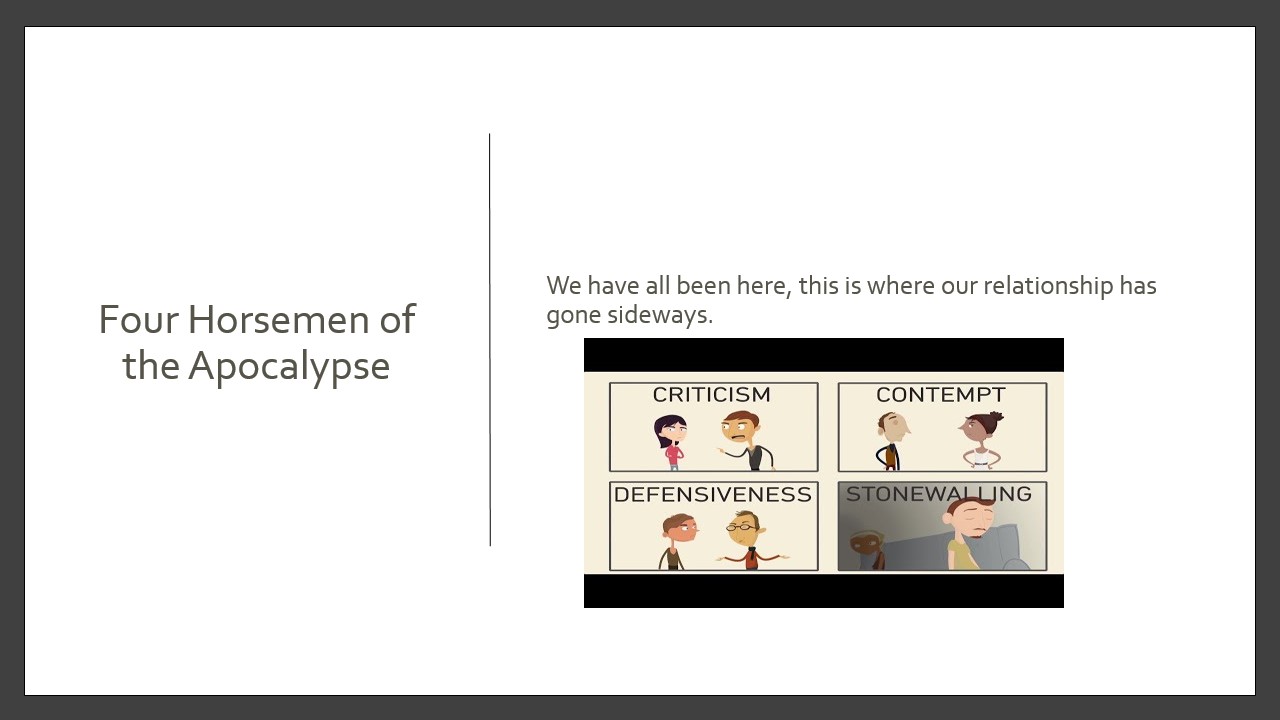
The Gotman explain the Four Horsemen of the Apocalypse in this short video:

https://www.youtube.com/watch?v=1o30Ps-_8is&feature=emb_logo

The Gottman Institute. (n.d.). Retrieved January 24, 2021, from https://www.youtube.com/user/TheGottmanInstitute


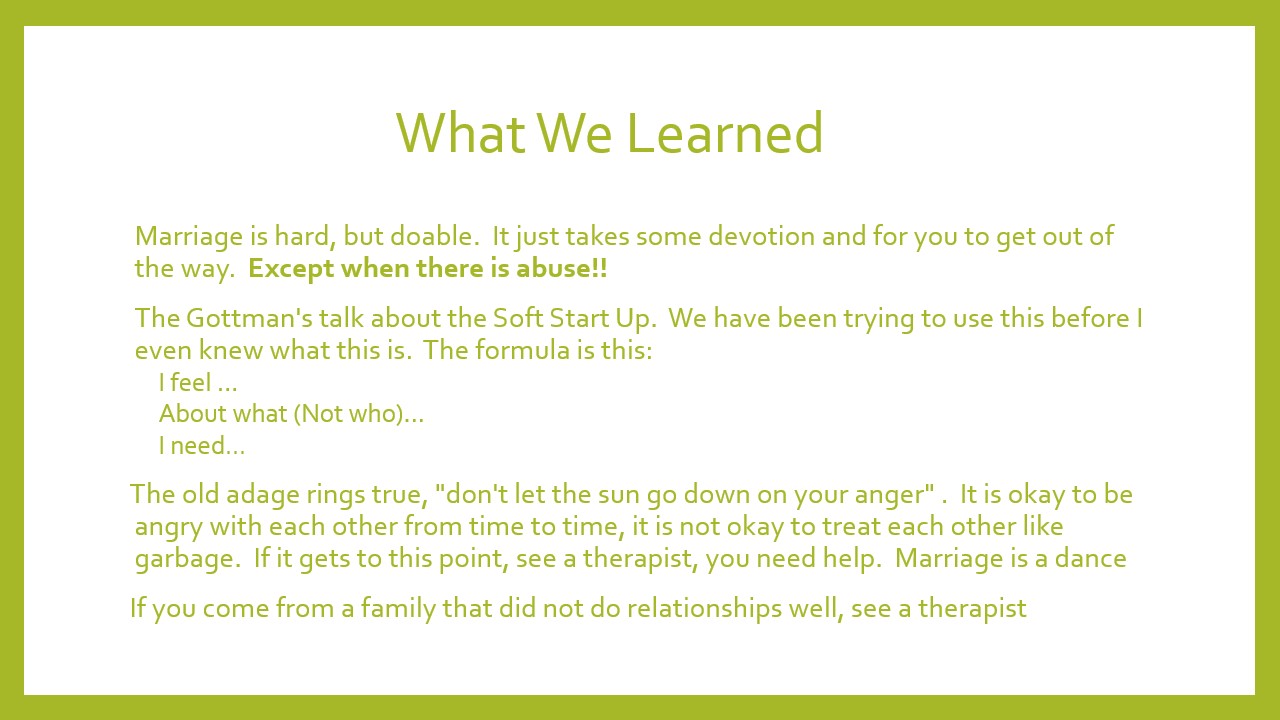
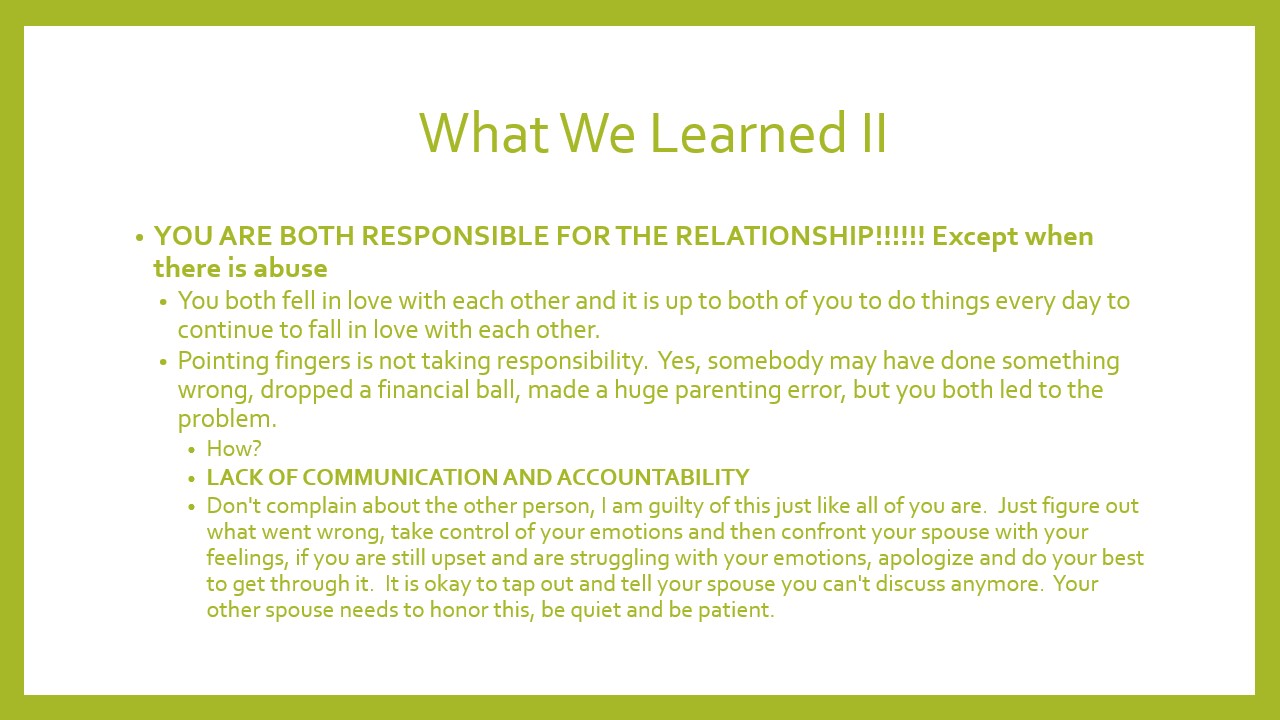
These four elements of communication are pieces that need to be in place so that a couple or a parent unit can communicate in an effecient and effective manner with their spouse or child.
  • Emotional intimacy is attuning to the other’s emotional state and changing one’s posture verbally, physically and emotionally to it.  It requires a relatively high degree of emotional maturity and intelligence
  • Intellectual intimacy is how you talk to your spouse about the day, the bills, purchases, life.  For your kids, it is the same, but more importantly, doing homework, reading and really knowing what is going on in their lives.
  • Physical intimacy is the space in which you spend with your spouse or your family.  It also requires a high level of emotional intelligence and maturity.  Physical intimacy has a lot to do also with being able to read each other’s body language.
  • Spiritual intimacy is the initimacy that comes when you are able to read and respond appropriately to the spiritual or primal energy your loved ones give off when they are emoting.  How does your wife feel to you when she is upset.  How does your kid feel to you when they are scared. Think iof the old adage, “The room got cold when she walked in”.  This speaks to the woman’s spiritual energy resonating off of her body.  Energy work experts talk about this as one’s taurus field, which is believed to extend 15 feet beyond your body


Chapman, G. D. (2015). The 5 love languages. Chicago: Northfield Pub.


52 Weeks of Healthy Eating – Carbohydrates

This week, I want to look at the macronutrient carbohydrates. Again, like last week, carbs are not bad for you and are an essential part of the macro nutrient building platform for optimal health.

The primary role of carbohydrates is to fuel organ activity, particulalry the brain. Most people don’t realize this, the brain is often a very overlooked organ. When we villianize carbohydrates or make a blanket statement that carbohydrates are bad, we truly demonstrate how little we undestand about carbohydrate functioning.

In thinking more about carbs for brain health, we need to turn back to our discussion to protein. Proteins break down into glycogen, which can also be used for fuel by the brain, but not as efficiently as glucose. We can get glucose from carbs, they are broken down into monosaccharides, polysaccharides and disaccharides. Monosaccharides are the smallest parts of carbs and can found in three forms, glucose, fructose and galactose. Two monosaccharides make a disaccharide nd the most comon source of this in our human diet is sucrose or table sugar, lactose or milk sugar and maltose, a slow digesting sugar. Polysaccharides are the largest and most complex of the carbohydrates and can be found in the forms of fiber, starch and glycogen. As you can see, carbohydrates are much more complex than just eating bread and pasta. Because of this, whole cloth eliminating carbohydrates from the diet might reduce the brain‘s source of energy and affect brain function.

In thinking about carbohydrates in more educated manner, we must consider the sources. Generally, I stay away from processed carbs and my diet as you may have noticed at this point largely relies on protein and plants. I do eat a moderate amount of carbs on the weekend, especially if I am training. Poor quality carbohydrates will have a buzz word in the packaging, “enriched”. These processed foods will often have carbohydrates and calories, but at times are lacking quality micronutrients and fiber. Focusing your consumption on whole, unprocessed foods will have you find that your diet is higher in fiber, vitamins and energy. An added benefit to consuming real, whole carbs is the presence of indigestible dietary fiber and plant material that keeps the colon healthy.

It is recommended that adults get around 45-65% of daily calories from the carbohydrates they eat. There is a lot that I could write about in this piece, but keeping it short, let’s look at common American carbs and take a peak at alternatives.

Breakfast:

Cereal or some other grained carb – often loaded with sugar(carbs on carbs)

Orange juice – more carbs

Coffee with milk and sugar (more carbs).

If you eat this breakfast, more than likely you are going to be hungry in an hour due to something called the Glycemic index. Basically, this is a scale that tells you how the carbs you are eating are being converted into fast burning sugar. If you eat too much fast burning sugar, you will burn out and have nothing in your tank, your sugars may go low and you may get shaky. Think of the breakfast above and starting your day with NOS and then your tank runs out of gas.

A better approach. Pick a breakfast with more fat and protein. Think eggs and toast and a piece of fruit like an orange. Instead of fruit on the bottom yogurt, think Plain Greek yogurt stirred up with some Stevia or Honey and some frozen blueberries and walnuts on top.

Instead of grabbing a soda mid morning, think more in lines of water with lemon. At lunch, try a salad with lots of protein, and low sugar salad dressing. Don’t be afraid to just add plain olive oil and salt and pepper. Or try a wrap with lots of protein and veggies. Stay away from the chips and the Kool Aide.

At dinner, try making your portions of carbs smaller and move towards larger portions of foods that have natural carbs and fiber in them like a double serving of green beans and salad. Keep your meat portion around the size of a deck of cards. If you do want to eat some carbs, think around the lines of small portions of rice, quinoa, teff or some other grain that has benefits to it. Chickpea pasta is still pasta.

For snacks, consider plain roasted nuts, small chopped up pieces of left over meats, grapes, celery with peanut butter, cheese, hummus and veggies.

Finally, there is some thought that much of our diseases in our country come from our poverty of fiber intake. To close, carbs are not bad for you, they are an essential part of our diets and are needed for optimal health. Consumed in appropriate proportions, we can be healthy, satiated and have sustained energy throughout the day. Consumed poorly, obesity, heart disease and other maladies can affect us. For more specifics on how to create a healthy eating plan, reach out to a Registered Dietician who can help you create a meal plan that will help you address specific dietary needs.

This week on the menu:

Breakfast, the usual, porridge, eggs, toast, fried chicken thighs, bullet proof coffee.

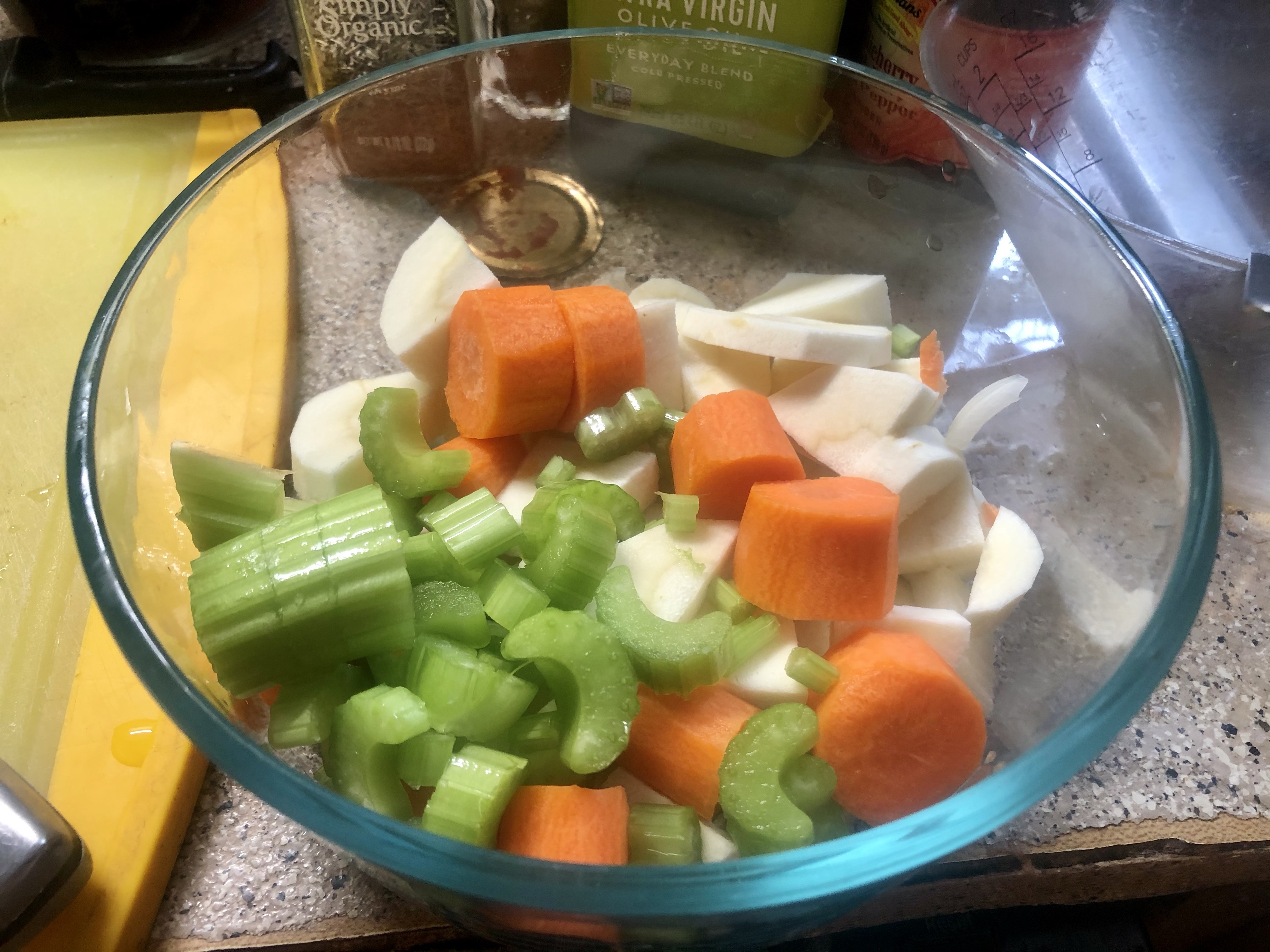
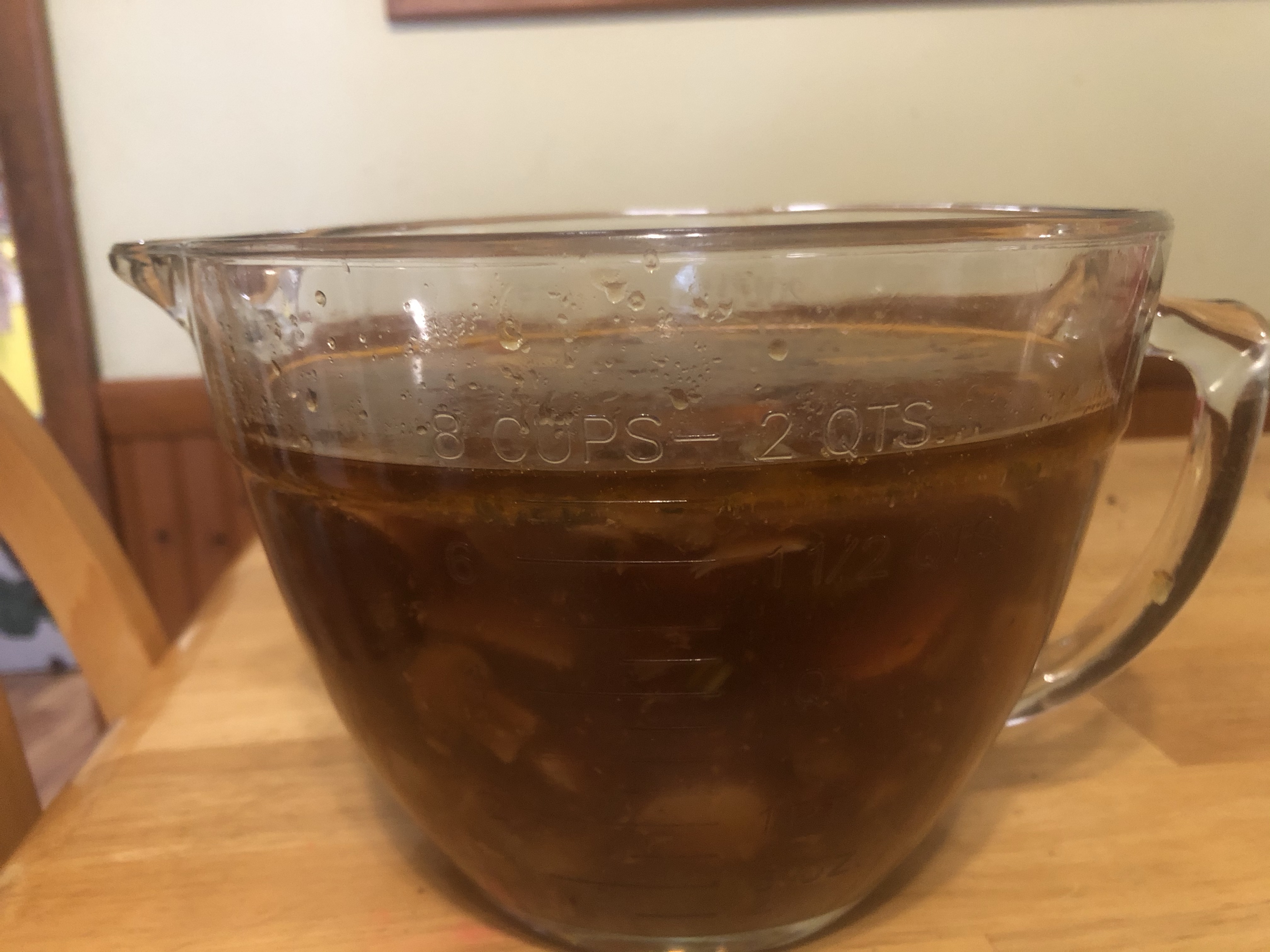
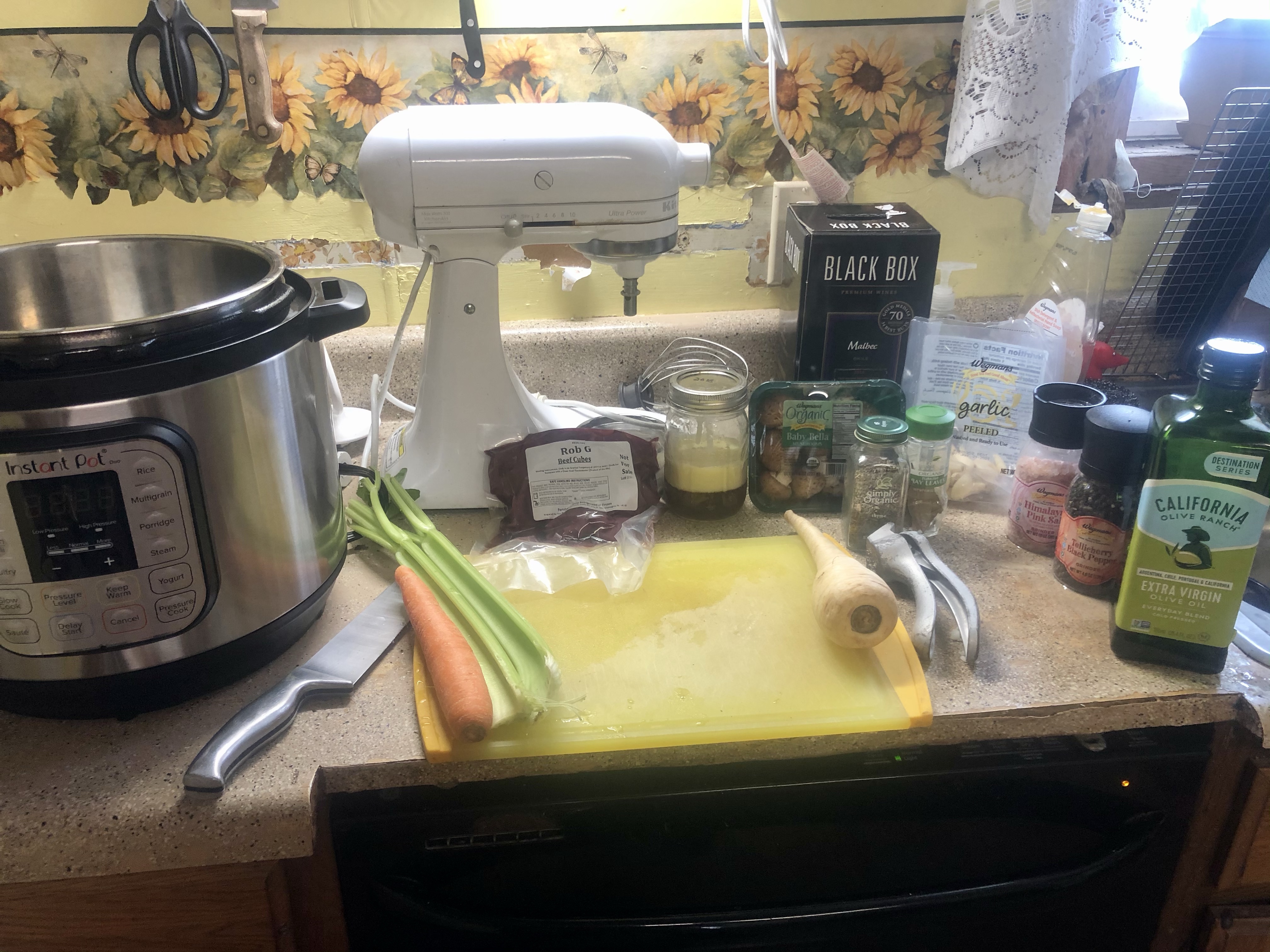
I bought my new favorite kitchen tool- an Instapot. I made a stew for this week in under an hour! This stew is very basic, it just has stew beef, carrots, parsnips, celery and mushrooms. My broth came from the bones of the cow my beef came from. That jar you see in the picture, the white stuff is the fat from that broth, I used about half of the fat seen in the picture.

Keto Instant Pot Beef Stew:

http://ketopots.com/keto-beef-stew
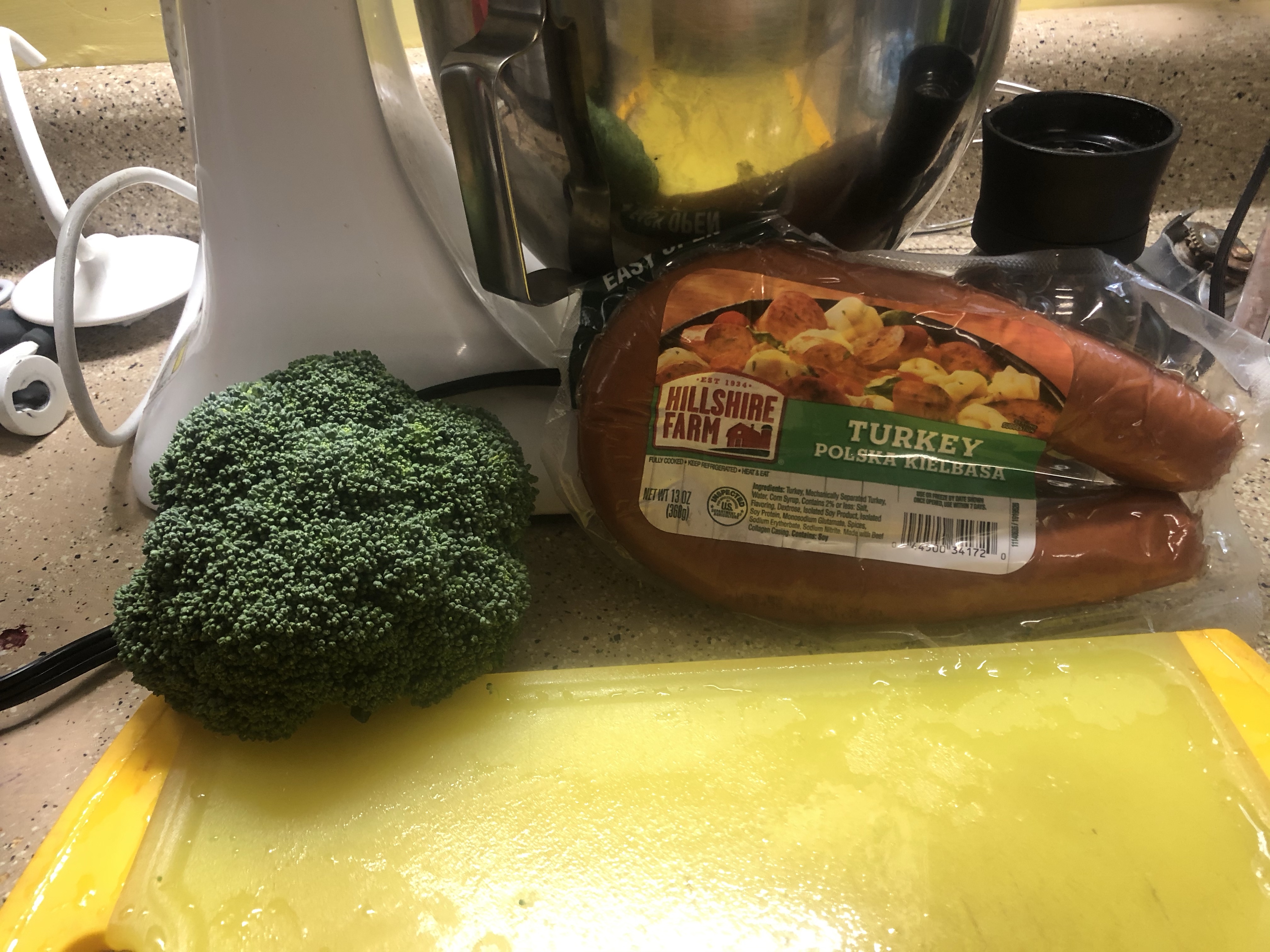
My second meal of the week was super easy as well – I just steamed some broccoli and sauteed some Turkey Polish Sausage:

The breakdown of how I will eat this meal will be this:

1 Cup of Broccoli – 55 calories

Turkey Polish Sausage 6 oz – 108 calores

Cheddar Cheese chunk -2 oz – 228 calores

Quest Bar – 180 Calores

Total: 571 kC, 34.4 g fat; 42.9 g carbohydrates; 56.8 grams of protein
Snacks this week will be my usual nuts and chocolate with an occasional protein shake thrown in. I also will eat a couple of turkey burgers I have laying around.

Coffee with Jesus

I had coffee with Jesus the other day and we got to talking about what is currently going on in the world the other day. Our other friend Sid happened to stop by and joined the conversation. Sid is Buddhist and he and Jesus see things fairly eye to eye, though Sid feels that Jesus talks too much.

After some small talk and pleasantries, we got down to the meat of the matter. “What the hell is going on” I asked? I of late have been rather amused by all that is going on in the world and even though I am a therapist and trained minister, I wanted to put this all away for a second and let go of trying to undertand and let Jesus state his point. This conversation turned the way many of his conversations go and really looked a lot like those conversations he had with his disciples, you know, “you have heard it said, but I say unto you” conversations. Sid rolled his eyes, he knew what was coming; in Buddhism, things are fairly simple, “live life in such a way as to reduce the suffering of all sentient beings”.

I pointed out my frustrations with getting people to listen to me and my struggles with the church. This really got no sympathy from Jesus or Sid, I actually think Jesus rolled his eyes. Jesus began pointing out that many of things he tried teaching, most folks could not get their heads around. I asked Jesus to give me some examples. Sid would chime in from time to time, these were their thoughts:

“We are not in competition” Jesus offered. Jesus offered that many of the narratives of his time and carried over to today are patriarchal stories of domination. On the contrary Jesus offered, he was all about embodied service, reconciliation and self giving. Sid would point out that Buddhism also teaches this. He would also tell me that Jesus told me that our problem in the world is our obsession with redemptive violence. He told me that folks were obsessed with it when he was around and it made a mess of things then. The whole crucifixtion thing had a lot to do with redemptive violence.

This got me to thinking about a book I recently read recently by Brian McLaren. In his book, McLaren offers these points about why Jesus was so subversive:

For Jesus, instead of offering stories of violent revolution or revence, Jesus would teach and model for us how to carry out transformative nonviolent resistance.

Instead of advocating escapist stories of isolation, he sent his followers into the world to be agents of positive change, like salt, light, and yeast.

Instead of leaving the oppressed in stories of victimization, he empowered them with a vision of faith, hope, and love that could change the world

Instead of the purification stories of scapegoating or ethnic cleansing, he encountered and engaged the other with respect, welcome, neighborliness, and mutuality.

Instead of inhabiting a competitive story of accumulation, he advocated stewardship, generosity, sharing, and a vision of abundance for all.

We are in rough times right now. There is a certain rigidity that pervades our Christian narrative. There is an us vs. them mentality. You are either in or you are out. Too often, I called a liberal. Simply, I believe I am just following the way. I would challenge you to do the same. Put away the labels, focus on the message that Jeus offers us. What does embodied service look like? Sid offers in his tradition, it is living in such a way as to reduce the suffering of all sentient beings. It is embracing the Buddha nature of the other in your midst. Jesus would counter that it is bowing to the “Christ nature” in others. I think we can glean a lot of wisdom from McLaren’s direction in his book.

I asked Jesus what to do about the upcoming inauguration. Can you believe that he quoted the whole “Be still and know I am God” quote? He caught my eye rolls and said that rolling my eyes was part of the problem. He told me that my ego was in the way and I was deluded by my own adherence to a certain way of thinking. Quickly becoming a jump on Rob moment, Sid piped in that strict adherence leads to suffering, leading to unhappiness, cynicism and doubt. He told me to let that shit go. Moreover, both offered that more now than ever, we need to pray. Pray for our oppressors and our oppressed.

Jesus would end his short discussion by talking about his “Christness”. He explained that even though it has been accepted that he is the human embodiement of the Christ, we all hold the potential to be seats of Christ and that we have the Christ nature in us. He told me to tell those I talk to practice being the light. Jesus told me that for all who tomorrow will start chaos, who hold beliefs different than ours, in them there is a Christ nature, there is beauty and there is suffering. Suffering from the adherence to a rigid set of beliefs that does not allow them to see the possiblity of an objective faith. Beauty because all are God’s beloved and that God is love and nothing can seperate us from this reality.

We finished our coffees, and because it is COVID time, we bowed a deep bow of compassion to each other, and because we really did not care what others thought, we embraced in a deep, loving hug.

Reference:
Brian D. McLaren and Gareth Higgins, The Seventh Story: Us, Them, & the End of Violence (Porch: 2018).

52 Weeks of Food Prep – Week 3 – Fat… “You keep using that word. I do not think it means what you think it means”

This week, I want to look at the macronutrient (macro) fat. Often misunderstood, fat is a very important macronutrient and especially important for satiety. For many years, fat was villianized and seen as the bane of our nutrition. We would be offered fat free everything and be led to believed that this fat free life = a healthy life. Reality was much more cruel. If you have ever had a hamburger made with 95/5 beef cooked well, you will understand the importance of fat in a recipe. To counter this, food companies would add tons of additives such as sugars, salts and artificial flavorings to overcome the lack of texture from the fat.

Did you know that fat comes in two forms? There is White Adipose Tissue and Brown Adipose Tissue. The white stuff can be bad. White adipose stores energy in large fat droplets around the body, specifically around the organs and the midsection. Too much white fat can create the risk of heart disease, diabetes and other diseases.

Brown adipose tissue or brown fat stores energy in smaller spaces around the neck and shoulders. It is made up of iron rich mitochondria and this is how it gets its color. During a process of thermogenesis, brown fat burns without creating shivering and burns calories. It is regarded highly as a possible treatment for obesity and some metabolic diseases. It is believed that current trends of cryo therapy, ice baths and other cooling devices can stimulate brown fat growth.

The dietary reference intake for lipids in adults is 20-35% of total callories. This equals out to 44 to 77 grams of fa per day. The Standard American Diet (SAD) is rife with bad fat, something known as trans fats. Trans fats are a topic all in themselves and will not be explored in length here. There is an over abudnance of Omega 6 and 9 fatty acids in our SAD diet and a poverty of healthy boosting Omega 3 fatty acids. Choosing a dietary lifestyle such as the Mediterranean diet or components of it will greatly increase overall Omega 3 fatty acids. This dietary approach is rich in fatty fish, nuts such as walnuts and olive oils.

In sum, choosing healthy fats, sticking with whole unprocessed foods and snacks will optimize your health.

This week’s Menu:

Breakfast:

Steel cut oats and protein powder

Pan fried boneless skinless chicken thighs and bullet proof coffee

Eggs and toast – 8 oz of egg whites, 1 whole egg, 2 pieces of Ezekiel Bread, 1 T of butter

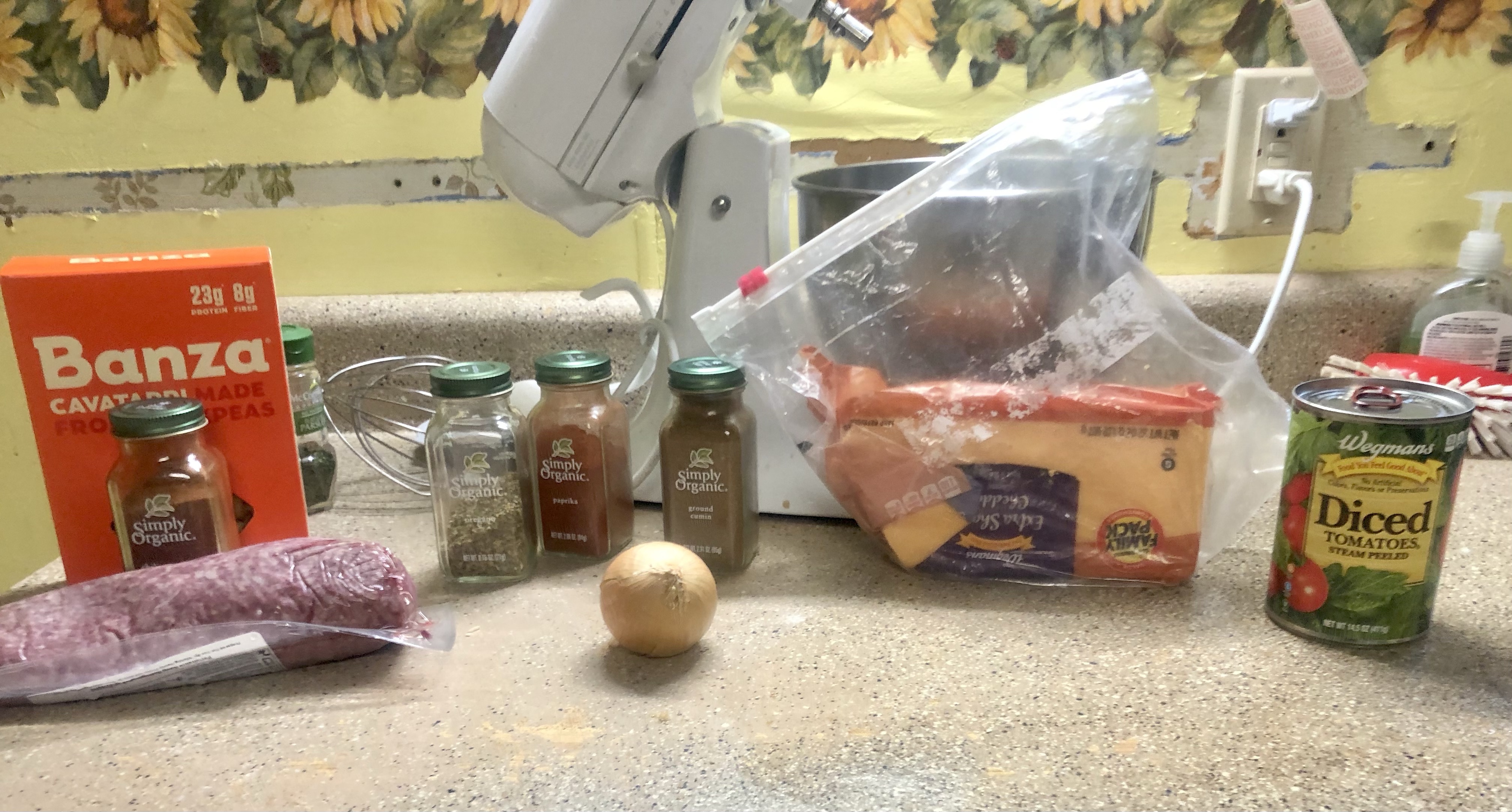
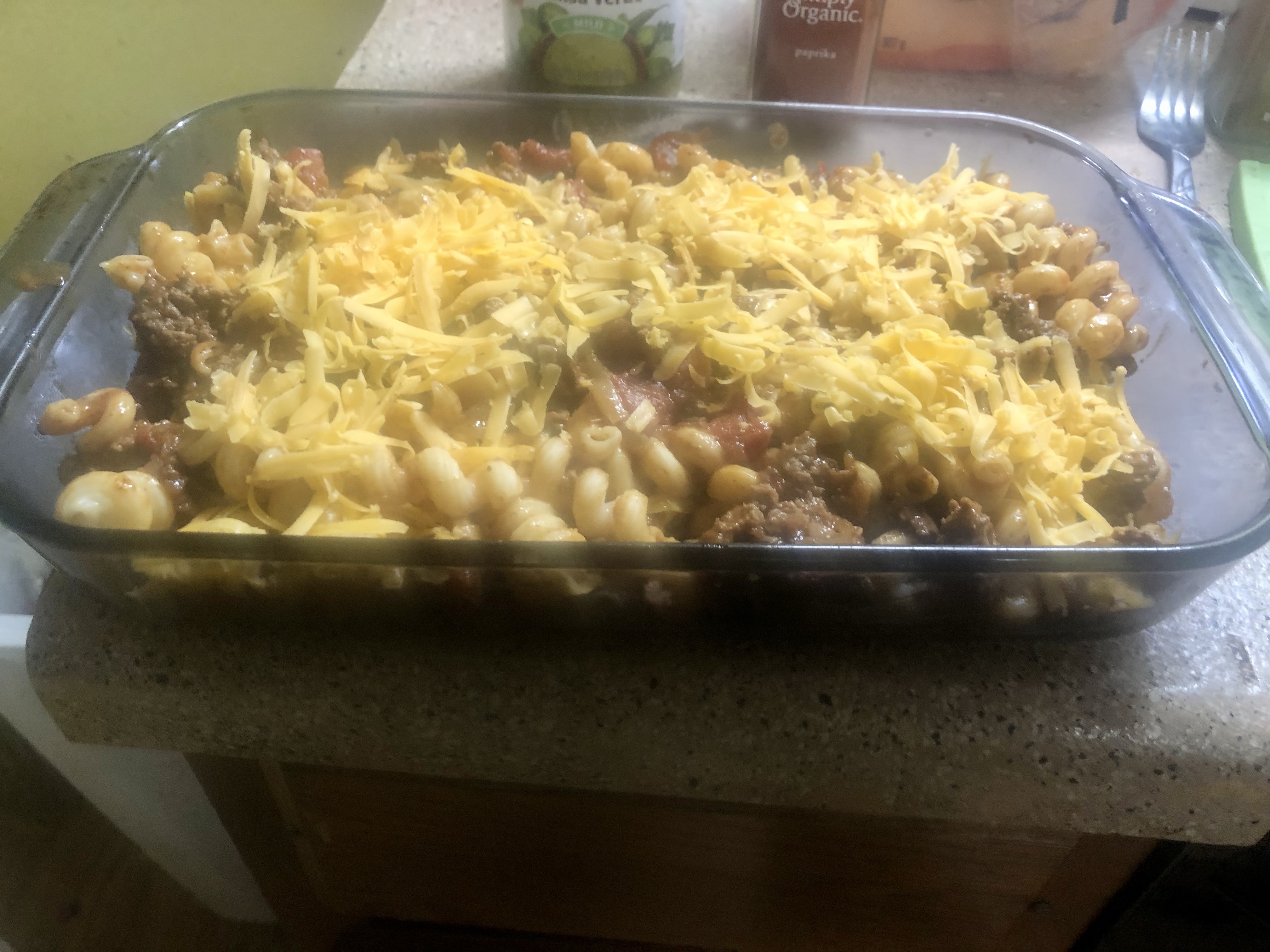
Chili Mac – something I ate too much of in the Army. This is a bit healthier and lower in carb:

https://lowcarbyum.com/low-carb-chili-macaroni/

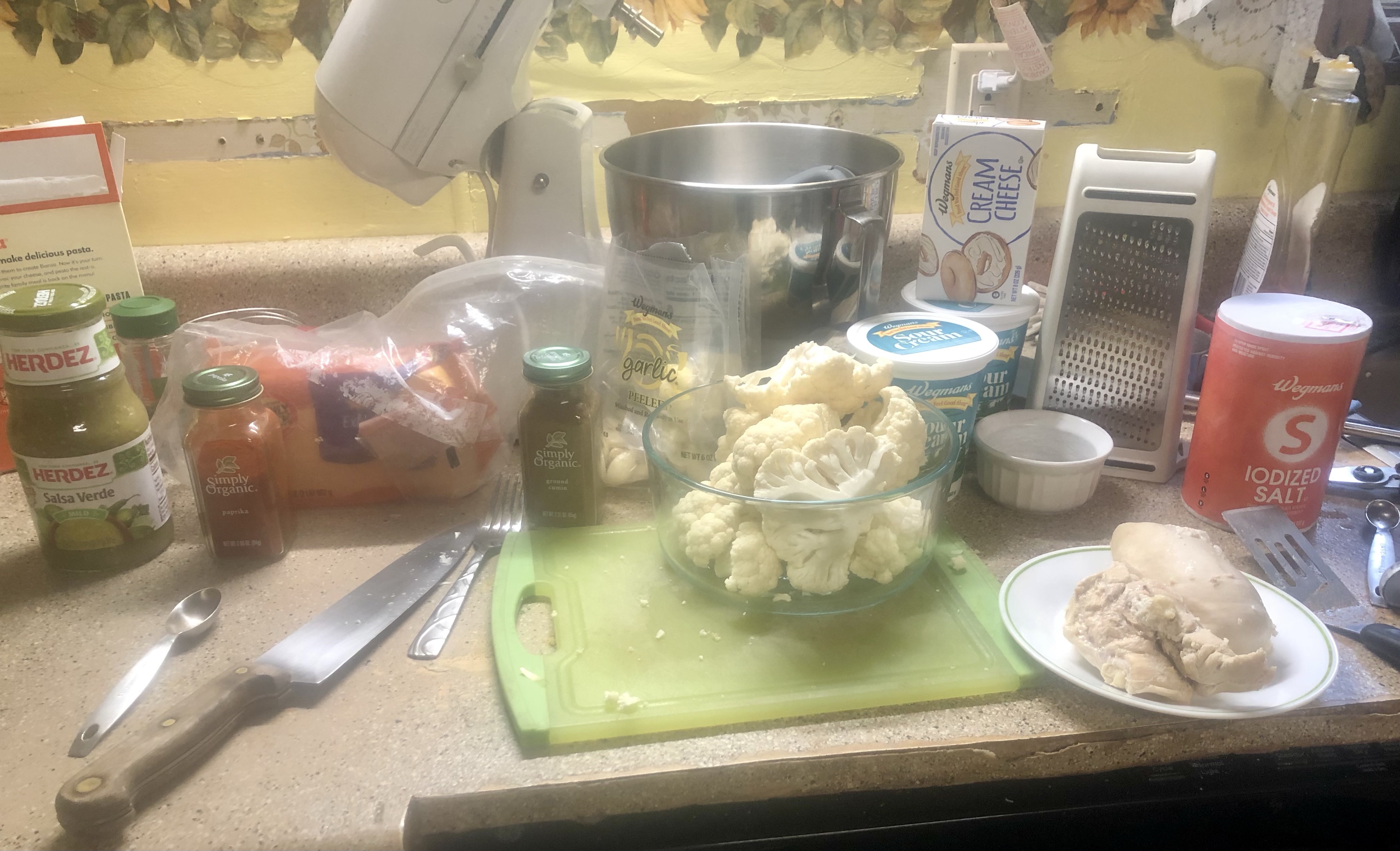
Low Carb Salsa Verde Chicken:

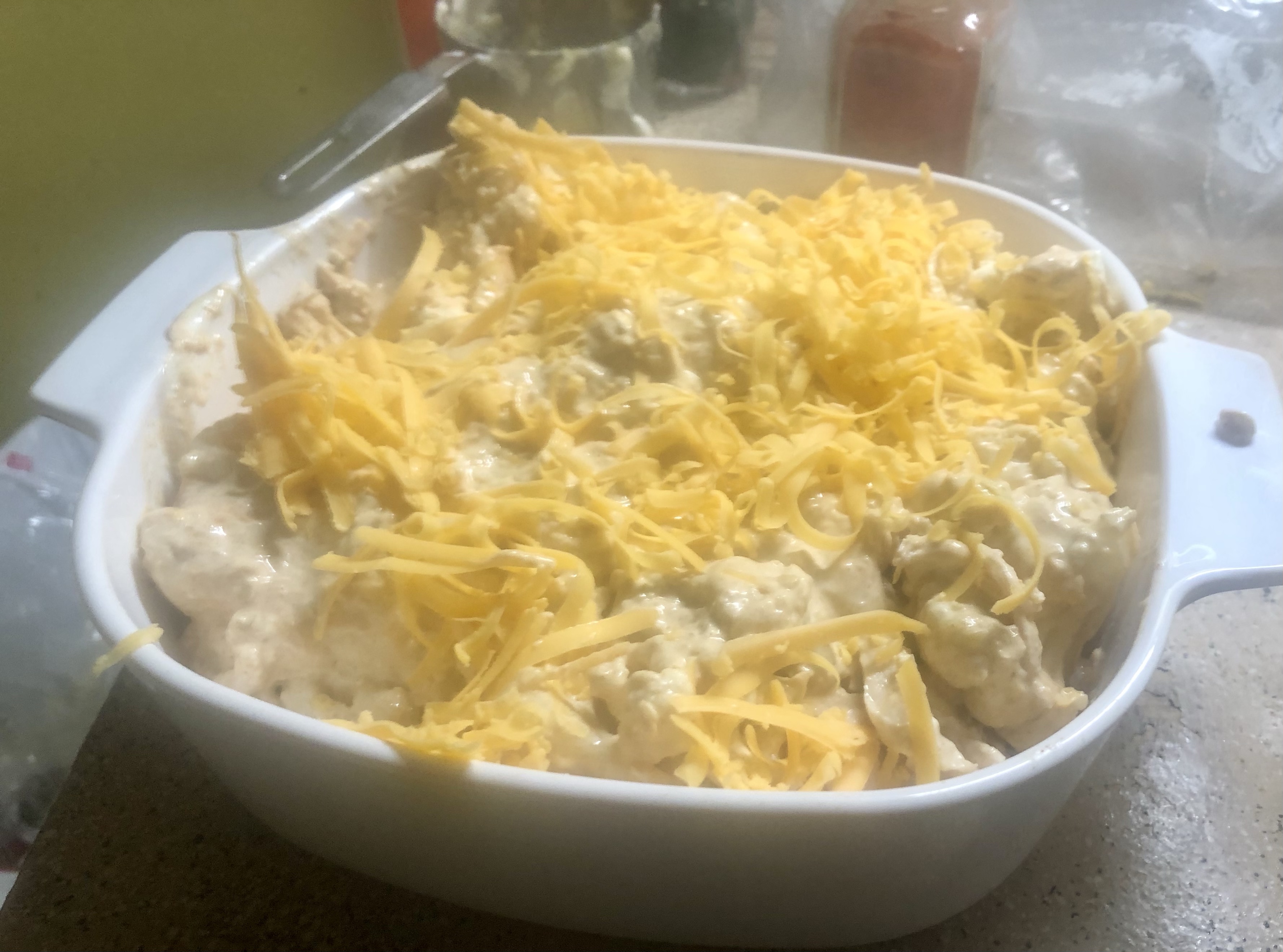
Low Carb Salsa Verde Chicken Casserole Recipe

For snacks this week, I am keeping it healhty and light. This is my last full week of off season, I start ramping up for the 2021 racing season with training for a 42 mile Gravel Bike ride in March. I am dealing with some lingering shoulder problems from last season, so I am going to have to induce a forced rest. Snacks this week will be nuts and dark chocolate and cheese.

52 Weeks of Healthy Eating- Week 2 – The power of Protein

I want to begin a discussion over the next few weeks about macronutrients or macros.  These are the fuel and energy sources of our food.  Done right, we create the high octane that fuels our body and sustains us over the day.  There are three macro nutrients: Carbohydrates, Fats and Proteins.

Today, I want to look at protein.


      Protein contains four elements: carbon, hydrogen, oxygen and nitrogen.  It is the building block of muscle growth and is composed of 20 amino acids, 9 of which, histidine, isoleucine, lysine, methionine, phenylalamine, threonine, tryptophan and valine are not made by the body and must be obtained through our diet.  There are 11 others that are considered non essential amino acids that can be synthesized in the body: alarnine, arginine, aspargine, apspartic acid, cysteine, glutamic acid, glutamine, glycine, proline, serine and tyrosine.  As mentioned in previous posts, there are a number of diets out there, but only a diet that contains animal proteins can one get a complete protein profile.  Much debate occurs in the nutrion industry and 2020 saw a huge wave of interest in vegan and plant based diets.  It is understood that vegan and vegetarian diets offer incomplete proteins, meaning that they are missing at least on amino acid.  If not adhered to consistently, this lack of micro nutrients can lead to a variety of physical and mental health concerns. 

       One can get a complete protein on a plant based diet by combining inclomplete proteins like rice and beans or peanut butter and bread.  There are micronutrients including B12, riboflavin, calcium, vitamin D, iron (heme iron is what is only found in animal proteins) and zinc that Vegans must be mindful of to ensure they are getting a proper balance.  There are diet protocols that follow sound nutritional priniciples and that have been studied on a large scale that can help one who chooses a vegan or vegetarian diet.  In my observations over the years, I found the Wahls diet, the Mediterranian, Okinawan diet, Blue Zones diet, DASH and Ornish Protocols to offer fairly substantive and complete macro and micro nutrient profiles to their meal plans and usually recieve fairly positive remarks from medical and nutritional experts. 

What do we need? Sedentary adults need about .8 grams per kilogram of body weight. An active individual may need as high as 1.2-2.0 grams per kilogram of body weight. You can supplement with protein powders. To keep it simple, you get what you pay for, but the cheap stuff will work. As a rule of thumb, if you consume it and it makes you feel funny, stop taking it. Whey protein has it all and is offered in concentrate, isolate and hydrolyzed. If you are sensitive to milk or other whey products, hydrolyzed may be a good choice for you. Whey isolates are the purest form of whey. Concentrates contain lactose, fat and minerals and are good for bulking.

Why do we need protein? Protein is important in the formula you use when considering your macros. Protein is more satiating than fat and carbohydrates. Carbohydrates placed poorly in the diet and with a heavy emphasis can leave one feeling hungry prematurely. In looking at obesity, protein has a key role in weight loss and weight management. Utilizing protein efficiently, one can experience sustained satiety, energy expenditure, and sparing fat free body mass. It is important to work with a Registered Dietician for one to be able to understand their protein needs.

Soy protein. In some situations, some caution should be given due to issues with estrogen interruption. It is beyond my scope of practice to go much into this without digging into research. It is accepted by science for one not to overuse Soy protein is there is a history of breast cancer. See your doctor and/or nutritionist for further guidance.

After exercise. It depends on what you are trying to do. As an athlete, I will supplement my lifting pre workout with 5 g of Creatine, a scoop of Protein and Almond milk. Afterward, I will use Casein which is another form of protein powder that is slower to digest and is more effective for muscle recovery. If you are weight training for performance, hypertrophy or even toning muscle, protein powders may be appropriate. It is important to talk with your coach, nutritionist or doctor on your needs. For most though, protein is not needed post exercise. Don’t give into the gimmicky protein bars being sold at the gym. The data is limited on the true effectiveness of protein synthesis from protein supplementation. With anything, it is better to consume your macros from your diet.


This week on the menu:

Breakfast


High Protein/ High Fat Steel Cut Oats

1/8 + 1/4 C of Steel Cut Oats + 3/4 + 1/8 and 1/4 C of water.  Bring Water to boil, add oats, 1t of salt and 1T of butter and bring to a slow simmer for 20 mintues.  In the last 10 minutes, add 1/4 of Craisins and 1 t of cinnamon.  When done, remove from heat and add 1 scoop of your favorite flavor of protein powder and 1T of Swerve Brown Sugar.  I am using a Cinnamon Toast Crunch flavor protein powder from the Vitamin Shoppe and the flavor is out of this world. 

This can be made in a slow cooker, add the same amount of milk or water, oats, cinnamon butter and salt to cooker and put on low before you go to bed.  When you get up in the morning, make your coffee or tea, add your Craisins, Swerve and Protein Powder to the oats and enjoy.

Scrambled Egg Wraps

6-8 oz of egg whites beaten with 1 whole egg.  Toss the whole lot into two low carb wheat tortillas with 1 oz of shredded cheddar divided between the two, add some salsa and mangia! 


Lunch:
Buffalo Chicken Dip and veggies – use any old Buffalo Chicken Dip recipe here.  I am using Pork Rinds as my chip and supplementing with veggies for my micro nutrient and carb profile. 

Broccoli Salad and grilled chicken- again, there are lots of Broccoli Salad recipes out there, I have nothing special to add here. 

Dinner:


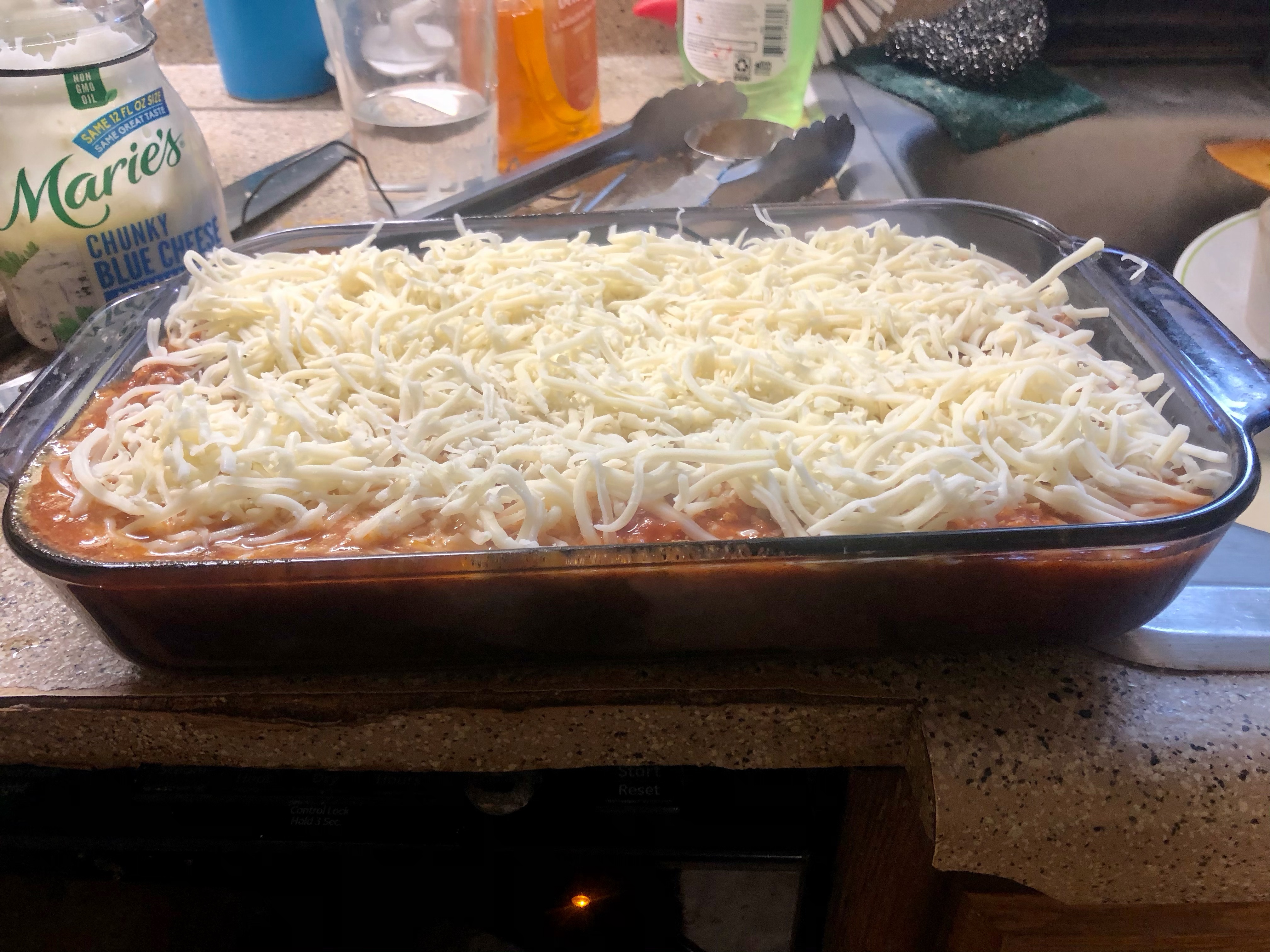
Keto Italian Beef Bake: https://kaseytrenum.com/low-carb-ground-beef-recipe-italian-keto-beef-skillet/

Snacks


A.M –

1/4 C  of unsalted mixed roasted Nuts and 2 oz of Cheese Chai tea with cream or whole milk in it. Lunch meat and cheese roll up ( two slices of each)

Protein Shake – p.m. – 8 oz of 2% milk, 1 cup of frozen fruit, 1 scoop of CASIEN protein powder.  For something different, add also 1 t of xanthum gum and blend until fluffy.  Or 8 oz of almond milk, 1 cup of frozen fruit, 1 scoop of CASEIN protein powder, 2T of olive oil, 1T of Walden Farms Maple syrup Pre workout shake: 8 oz of almond milk, 1 scoop of protein powder and 5 g of Creatine.


References:


Fisch, J (2018). The Easy 5- Ingredient Ketogenic Diet Cookbook: Low Carb, High – Fat Recipes for Busy People on the Keto Diet. Rock Rock Ridge Press

K. (2020, April 5). Low Carb Ground Beef Recipe: Italian Keto Beef Skillet. Kasey Trenum. https://kaseytrenum.com/low-carb-ground-beef-recipe-italian-keto-beef-skillet/

Kruskall, L. J. (2018). Exercise Professionals Guide to Sports Nutrition and Weight Management (2nd Ed) (2nd ed.). Healthy Learning.