Shoveling snow

It has been a mild autumn, many warm days with beautiful autumnal colors leading into a bit of a cloudier and less colorful November. We have had our first snowfall and it was not much to write home about.

In a couple weeks, or sooner, it is going to happen. It is really going to snow. In years past, we have gotten up to 112 inches. That’s a lot of snow. If you don’t have a snow removal service or a snow blower, you are going to have to shovel all that snow.

In an article by Watson, Shields, and Smith(2010), they point out that snow shoveling injuries are common in the United States. Their study found that 195, 100 individuals were treated in the United States emergency rooms for snow shoveling injuries. This data came from analysis conducted from 1990-2006. Muscle strains were the most common followed by slips and falls. Cardiac related issues accounted for 6.7% of the cases which came out to 1647 deaths.

This article is going to address specifically muscle strains of the lower back and things you can do to mitigate risk. First off, let’s look at the muscles involved in shoveling snow. You will be working your glutes, hamstrings, quads, abs, lower back, upper back and shoulders.

Let’s look at mechanisms of movement. The traverse plane is the plane of motion utilized for snow shoveling.
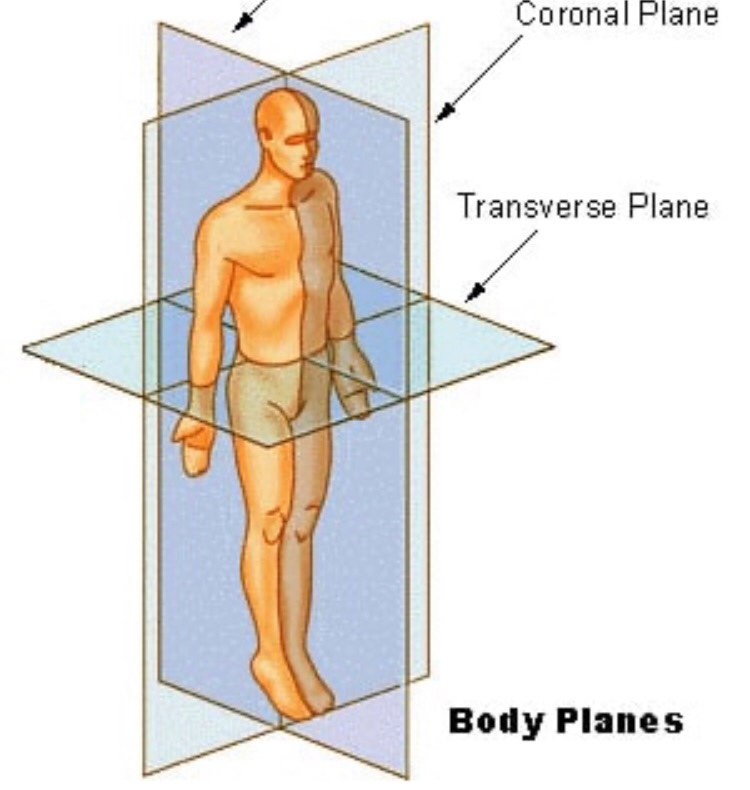
In this plane, you are are going to engage in the rotational and bending movements that occur with snow shoveling. If you have any imbalances or instability in any of the muscles of lower back, shoulders or hips, your are more prone to strains and tears. Also as you age, your tendons become less plyable, leading too to tears and strains. I have already written an article on glutes, so take a peak at that.

Specifically, the old adage, “lift with your legs” applies to snow shoveling. The other piece I would add would be “don’t over extend”. The ideal motion would be bend over, push snow with your shovel, squat slightly, lift the shovel and push/throw the snow off the shovel without over rotating your body. Your left or right shoulder should not come to your center line of your body. It is important to lift less than what you think you can. The following list was borrowed from an article by Angie Horjus, NBC- HWC(2020):

  1. Bend your knees, lift with your glutes first, then your legs. Let them do the bulk of the hard work. Your lower back will thank you for it.
  2. Lift correctly. Stand with your feet shoulder-width apart for balance and bend at the knees rather than at the waist or back. Keep the shovel close to your body rather than extending your arms all the way. Tighten your gluteus maximus, core and abdominal muscles—then lift with your legs as if you are doing a squat.
  3. Put your chest and upper back into it. Your chest and back are the next largest muscle groups after glutes and legs. Think about the muscles you should use for the task at hand and squeeze them as you lift heavy. Your smaller muscles in the shoulders and arms should not be the main movers and only help a little.
  4. Maintain good posture. Stand tall with your proper height shovel, soften the knees, draw your navel in and up toward your spine while bending down, scooping, then lifting. If possible, eliminate the twist or keep it to a minimum by tossing the snow more to the front of you. As you lift the snow, keep the shovel blade close to you, to reduce low back strain.

Other pieces of advice. Stay hydrated; you actually lose as much or more water in the dry winter air than you do in the summer. Layer – it is okay to be cold, you can always warm up, once you are sweaty though, that is when hypothermia sets in. Finally, if it hurts STOP DOING what you are doing. The old doctor’s advice rings true- Patient -” Doc my arm hurts when I lift this weight” Doc: “Stop doing that”.

Stay safe this winter.

Reference:

Horjus, A (2020, February 24), Shoveling Tips for a Safe Snowy Workout. Retrieved November 26, 2020, from https://thinkhealth.priorityhealth.com/shoveling-tips-for-a-safe-snowy-workout/

Watson DS, Shields BJ, Smith GA. Snow shovel-related injuries and medical emergencies treated in US EDs, 1990 to 2006. Am J Emerg Med. 2011 Jan;29(1):11-7. doi: 10.1016/j.ajem.2009.07.003. Epub 2010 Mar 25. PMID: 20825768.

Let food be thy medicine

Hippocrates once said “let food be thy medicine and medicine be thy food”. We are coming up to a busy time in the year for food consumption and then the subsequent New Years resolution to lose it all.

Let’s think for a moment, what was Hippocrates thinking when he offered these words. First of, it is believed that Hippocrates did not actually say this, much like many other famous quotes. It is believed that Hippocrates did view nutrition in high regard. I am fairly intimate with nutrition as an endurance athlete, proper nutrition plays a key role before, during and after an event. I have also utilized nutrition in some way the entirety of my life to control my Attention Deficit Hyperactivity Disorder (ADHD). Starting in the 1980’s when my mother was introduced to the Feingold Diet, to adopting a largely Paleo/ Keto diet to control mood and focus, I have found diet to be crucial in maintaining a non medication approach to my symptomatology.

Modern research supports this thought. You can find dozens of articles, books and gurus who purport amazing feats of health improvement with the alteration of one’s diet. I would as we get geared up for the new year and new diets to not focus so much on these fad diets and gurus.

Diets don’t work. It’s true, committing to a diet without understanding the mechanisms as why you are overweight (It’s more complicated than you eat too much) or even obese (yes, these are different experiences) will only cause to eventually return to your baseline weight. Here is a peak why. It is generally understood that most people who go on a diet will initially lose x amount of weight and maintain this loss for x amount of time. Within 5 years though, this weight can/will be gained back and at times, double and even triple the amount. Here is why. The body keeps a score for the weight you are at. Evolutionary design reminds us that we were at that weight and when we go into a state of deficit (diet), our body fights back to maintain that weight, thinking we are in starvation. Adopting a lifestyle change can alter the equation. 

Let me point to myself as an example. My family lineage is marked by obesity and other diseases related to obesity such as heart disease, blood pressure, diabetes and even cancers. In 2005, I made a choice to not live like this and went out and bought an elliptical trainer and buckled down on my current vegetarian and vegan diet that I had been using for about 4 years. I immediately saw an improvement in mood, mental clarity and physique. I began a second Master’s program in 2008, but I created a lifestyle that allowed me to maintain balance with my ADHD. I lost about 15 pounds of fat, maintained a 4.0 grade point average, created a new career and became an athlete. I began to learn how to use the food I was eating as a crucial tool to benefitting my health rather than just a consumptive endeavor I had to engage in several times a day. 

Tying it all together, I want to not only encourage lifestyle change as a means to maintain a healthy weight, but would also encourage you to eat to feel. These days, eating a full McDonalds meal makes me feel ill. Eating to feel then is paying attention to how your food sits with you. Also practicing mindfulness in your eating also enhances the experience. How does your food make you feel? Does it give you a tummy ache? Does it give you a headache? Does it make you feel sluggish? Are you tired before noon? Food consumption is more than just sitting down and plowing into your meal. Find a nutrtionist that can help you figure out proper macronutrients (fats, carbs and proteins) for your body composition can help greatly in satiety and energy expenditure. A nutritionist can also give you a list of micronutrients (minerals and vitamins) that can be blood tested to look for deficiencies. Some of these deficiencies can lead to signficiant mental health issues. We can also identfy issues with thyroid hormone, estrogen and testosterone deficiencies, all of which impact mood and physcial health. 

I am not a nutrtionist and the following info should not be considered as sound nutritional advice, please see a nutritionist for a plan specific for you. 

As an athlete, I usually try to take in around 2200-2500 calories during my peak where I am training 7 days a week and doing two a day trainings. All trainings are 1 – 6 hours long.  Here is a sample day for me:

Breakfast (my favorite meal)- (my favorite) egg white omlette (8-10 oz of egg white, 3 slices of bacon, chopped, 1 cup of Kale, 1/4 c of feta), bake 10-15 mins at 400 degrees. Top with salsa. Coffee for drink, sometimes kombucha. Note the  high protein, high fat, low carb, lots of veggies, this formula is a staple of my diet.

 I usually don’t eat cereal or toast.  I do eat steel cut oats and make a protein french toast during peak training. Thinking out of the breakfast box is another key to healthy breakfasts.  Try smoothies, even a piece of pan fried fish or even boneless skinless chicken thighs with a side of veggies. If you are vegetarian, beans or refried beans, tofu and tempeh are good protein sources.  

Lunch – larger meal around 6-800 calories,  lots of veggies, protein, healthy fats.  Low carb, no processed foods/grains(pasta, rice, potatoes sugars, syrups) . Water and tea/coffee, sometimes kombucha

Dinner- medium size meal, around 500-600 calories, lots of veggies, protein, healthy fats.  Low carb, no processed foods.  Water.

2 snacks – 200- 300 calories.  Moderate carbs- protein shake with a nut milk, sometimes jerkey, sausage and cheese or sometimes a Picky Bar or a Kind Bar. 

I do supplement with a multi vitamin from November – March.  I also take a beef organ supplement because consuming beef organs is gross.  

Please understand when I say no, this does not mean never.  I love pancakes and waffles, ice cream, cheese burgers, fries and cookies, doughnuts, brownies and cakes like the next person, but I am very mindful of the calorie load these bring on and I make room in my diet to allow these on the days I consume these foods.  This holiday, do the same thing.  Be mindful of the calorie load.  

For Holiday eating, focus on small portions, eating to feel.  You don’t need to pig out, there is enough for leftovers. Leftover taste better anyway.  That said, just eat and enjoy yourself.  But be mindful and don’t stress.  Go for a walk after dinner, play football with your grandkids, dance with your wife.  Consider this though, if you eat half a pound of holiday cookies, you are going to consume around 1600 calories. Think you can’t consume half a pound of cookies?  Pay attention to how big half a pound is and see if your cookie plate is equal to that.  One cup of Buffalo Chicken dip is around 500 calories, not including the chips or crackers.  Add a few mixed drinks, beer or wine into the mix and you could have hit 3000 calories before dinner even starts.  Thanksgiving dinners can be 3000 calories or more.  

Most maintainence calories for most people is around 1300 – 1500 calories a day.  Healthy lifestyle “diets”(not diets, eating protocols for lifestyle change) are the Wahls Protocol, the Mediterrian Diet, Vegan/Vegetarian, Blue Zone Diets, DASH Diets, Paleo and Keto in some regards (These last two must be monitored by a doctor if you are already dealing with blood pressure, diabetes or cholesterol issues).

Small changes you can make now are walking 3-4 times a week for 45 minutes at a time at a Rate of Percieved Exertion (RPE) of 3-5 where 1 is no expenditure(sitting on the couch and reading) and 10 is running with me for 32 miles.  Other changes are joining a gym and hiring a personal trainer. Finally if you are struggling with your weight and have had failed relationships with diets, start working with a nutritionist.  

Finally, as we embark on the new year, let’s not committ to losing 15 – 20 or more pounds, let’s consider our lifestyle, how we are living and seeing our food as a means to improving health rather than something that we must consume for life.

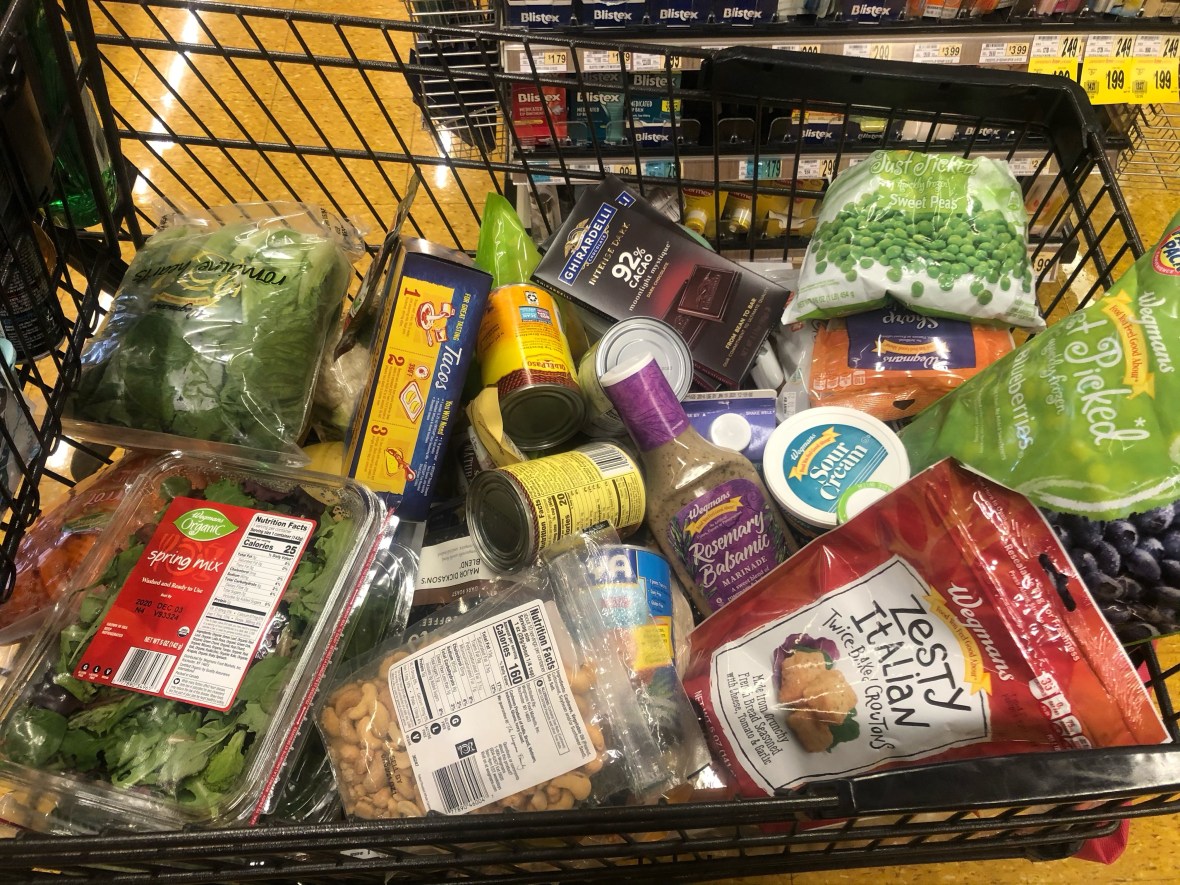
Below is a sample of my weekly shopping trip. Note the only convenience foods are those that are exhaustive to cook( beans, coffee, dark chocolate, salted cashews)

Equanimity

It definately is not mile 1 or even mile 5 for that matter. Maybe it is mile 16 or maybe it is mile 23, but what ever mile it is, it is not the first. And my legs hurt, my feet hurt, I haven’t eaten a full meal in 3-4 hours, in fact I can’t eat anything right now because it imediately makes me want to go find a tree. Everything sucks, why the hell did I sign up for this stupid race? It’s hot out here, that Aid Station better have Mountain Dew, that cheesburger and IPA at the end sounds nice.

Stupid traffic, stupid slow drivers, don’t they know I have somewhere to be?

COVID has messed up everything, our life, our mental health, our rituals, our norms.

Breath. I truly believe that the Lord with make it okay, maybe not the okay you are looking for though. By the way, what did Jesus mean by that whole “do not worry” thing?

I want to introduce you into the concept of equanimity. Essentially it is maintaining a sense of being chill when bad stuff was happening.

I have been thinking a lot about the concept of equanimity the last few months as our world has continued to devolve into chaos.

What is equanimity? Equanimity is a manifestation of resting in God’s grace and trusting in His plan. Humbled is another word that could be used to describe the state of equanimity. Christian equanimity is a matter of recognizing that our thoughts and ideas can only go so far compared to God’s. Additionally, when we truly accept that we “can do all things through God who strengthens” us, we cannot feel weakened by anything. Writing on Christian equanimity, Frederic and Maryann Brussat reference the teachings of Paul in the fourth chapter of Philippians. Another thought on this is accepting the things that we cannot change – more on this later.

I want to delve more into equanimity from a more philosphical sense, borrowing from Buddhism. In Buddhism, equanimity is only one of the four sublime attitudes: quanimity(upeksa/upekkha; lovingkindness(maitri/metta); compassion(karuna) and empathetic joy(mudita). It has been my study of world religions that sometimes Christian language does not capture adequately the right words. Jesus’s notion of not worrying does not have the same weight if you only think of equanimity and not consider the other three Buddhist attitudes that go with it.

Equanimity then from a Buddhist perspective is a bit more deeper, focusing more on a state of consciousness and a way of being where in Christianty there is a sense of doing(accepting).

My final point then has to do with creating a sense of being and culitvating a sense of equanimity through an attitude of acceptance. The whole of 2020 has been a disaster for all of human kind. I ask you to consider accepting what is and detatching for a moment. This does not mean not feeling emotional.

From another philosophy, I borrow from Stoicism and along with acceptance, I peak at the notion of detatchment. Apatheia refers to a state of mind where one is not disturbed by the passions.

So then, as you plan the closing of your year, as you plan your final sermons, your final goodbyes to 2020. Grieve the loss of opportunities, even be mad about the missed opportunities, but in humilty and compassion, bow to them, greet them at your door, welcome them to your home and like that annoying or even toxic family member you can’t stand, don’t talk to them. We are all in this for the long haul. Cultivate a sense of acceptance and turn instead to cultivating of love and peace for that which we can control.

You have a weak butt

A lot of people at the gym are all about the squats, they want a big butt. Butt(see what I did there?) what does a front or back squat get you and is that all there is?

Let’s talk about kinetic chain for a moment. The old song, the arm bone is connected to the shoulder bone and so on is rather accurate. The body is an interconnected parcel of bone, muscle, fascia and other connective tissue. All play a role and if one piece if out of order, other parts down the chain can be too. Take plantar faschitis for example. It is not just a foot thing, it is a lower and upper leg problem and it is a butt problem and it is a back problem and so on.

Doing front or back squats only will leave you with a weak butt. Focusing on the gluteus maximus muscle only leaves out the gluteus medus, minimus and a bunch of others.

5 other exercises to round out the experience.

1. barbell, dumbell and machine squat

2. single and double leg presses that allow for full thigh extension

3. stiff -leg and romanian dead lift

4. Reverse Lunge with a dumbbell

5. Glute/hamstring raise